
The Story
Why it exists.
The beginning
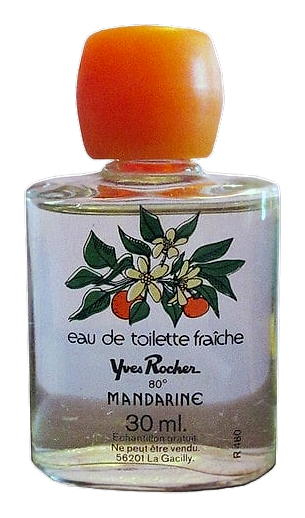
In 1979, Yves Rocher asked perfumer Raymond Chaillan to bottle the smell of a single fruit. Not a composition, not a concept, just mandarin. The brief was almost radical in its simplicity: capture the bright, zested peel of a ripe mandarin and nothing else, no smoke, no clever twist. Chaillan approached the task with the discipline of someone used to working in restraint. A pure citrus eau de toilette, in an era when most fragrances leaned on heavy bases and dense accords, required a different kind of confidence. The fruit had to do the talking. What he bottled was less a perfume in the traditional sense and more an impression: the cool snap of citrus oil, a thread of white floral sweetness running underneath, and the unmistakable sensation of sunlight on skin.
What makes Mandarine interesting isn't what Chaillan added, it's what he held back. Here the structure stays light, almost transparent, built around restraint rather than ornament. Honeysuckle drifts through the heart without ever turning heady, lending a green, almost nectar-like sweetness that softens the citrus without burying it. The powdery note stays whisper-soft, almost talc-like, the way sun-warmed skin smells after a shower, present but never heavy. There's no resin, no dark base, no smoky undertow pulling the composition downward.
The evolution
First thirty seconds is pure mandarin, wet, sweet, slightly sharp, the way the fruit smells when you split the skin with your thumb. It doesn't announce itself, it just arrives, like a glass of something cold set down on a sunlit table. The tangerine joins quickly, softer and sweeter, and the citrus accord settles into something fuller, almost like tangerine juice with a spoon of honey stirred in. Within ten minutes the honeysuckle starts pulling the brightness sideways, adding a green, almost nectar-like sweetness that keeps the citrus from feeling one-note. The white florals bloom quietly underneath, never competing, just softening the edges. After the first hour the powder note arrives, gentle and dry, the way skin smells after talc, after fresh laundry, after a long afternoon. This is where Mandarine lives most of its life.
Cultural impact
Mandarine Eau de Toilette Fraîche arrived in 1979, a year that placed it firmly within the era of light, sunlit fragrances that defined the late 1970s. Its stripped-back formula, built around a single fruit note rather than a layered accord, gave it a clarity that stood out against the denser, more opulent scents of the period. The fragrance quickly became one of Yves Rocher's most recognizable everyday releases, carried by its simplicity as much as by its freshness. What made it resonate was its accessibility, a bright, unpretentious citrus scent that didn't demand attention but offered immediate, easy pleasure.