The Story
Why it exists.
The beginning
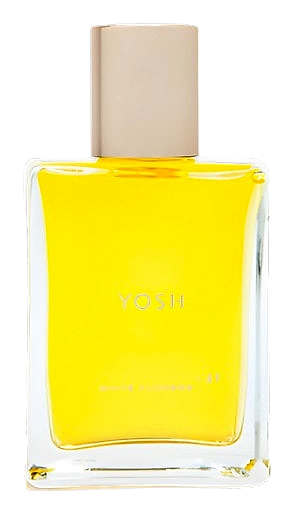
Yosh Han grew up watching her mother arrange flowers. The Japanese art of Ikebana, with its disciplined attention to the relationship between bloom, stem, and the spaces in between, shaped how Yosh Han would later think about scent. White Flowers 1.41 arrived in 2010, part of an ongoing inquiry into what scent can do beyond aesthetics. The house assigns each fragrance a number in a sequence, a system that orders the collection without necessarily explaining it. This particular composition takes white florals as its subject, but it doesn't follow the expected path. Instead of building toward sweetness or fullness, it works with restraint, asking what happens when a bouquet resists its own instincts.
Petitgrain and Siberian fir aren't typical base material for a white floral composition. Their presence here shifts the trajectory away from what such a fragrance might otherwise become. The perfumer has spoken about her mother's mastery of Ikebana, the Japanese art of flower arrangement, where balance comes from the relationship between bloom, stem, and empty space. White Flowers 1.41 applies that logic. The florals, gardenia, tuberose, lilac, sweet pea, and narcissus, occupy the foreground.
The evolution
The opening registers as crisp and almost mineral, with freesia and violet providing brightness that reads more like morning than garden. Gardenia follows, soft and deliberate in its arrival. Moroccan rose and Egyptian tuberose step forward as the initial notes settle. The hand-off between these layers feels natural, nothing competing for attention. As the composition moves past its initial phase, the white florals are fully present, but something green is already working underneath. Petitgrain brings a bitter, green quality, the stems asserting themselves. The drydown shifts toward Siberian fir, which introduces a cool, dry character. A faint trace of green can linger on fabric, like the memory of a garden after rain.
Cultural impact
White Flowers 1.41 arrived in 2010 as part of a numbered sequence, positioned as one exploration within a larger body of work rather than a standalone release. The composition's character leans green and restrained, qualities that distinguish it from lush, saturated white florals. Yosh Han's connection to Ikebana informed an architectural approach to the fragrance, treating each note as part of a carefully considered whole. The structure emphasizes balance and space, avoiding excess while allowing each element room to register.