The Story
Why it exists.
The beginning
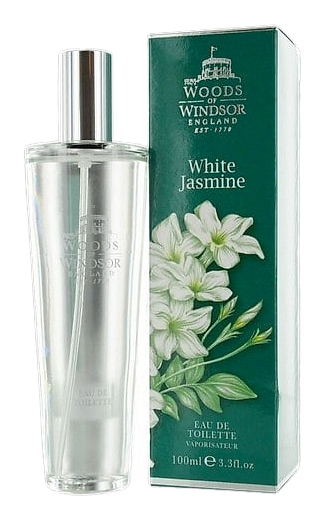
White Jasmine didn't arrive with fanfare. It joined Woods of Windsor's collection as part of the house's ongoing conversation with the English garden. The brand has spent decades translating botanical traditions into wearable form, building an archive that draws clearly from a classically English floral sensibility. White Jasmine is one of the quieter entries in that archive, a study in restraint rather than spectacle. Its release year isn't documented in the major fragrance databases, which only adds to its sense of unhurried confidence. The jasmine here is the headline, but the framing matters: orange blossom and green leaves hold the door open, ylang-ylang and rose round out the heart, and sandalwood closes the curtain without heavy-handedness.
What makes the composition interesting is its restraint with ylang-ylang. Many jasmine-forward florals lean into ylang's banana-sweet density to amplify the indolic heat. White Jasmine uses it as a structural element instead, adding just enough weight to anchor the heart without tipping into the narcotic territory that overwhelms some white florals. The green notes at the top, listed simply as Green Notes rather than a specific leaf, provide the crucial contrast: without that vegetal snap, the jasmine would read as one-dimensional. With it, the scent has a morning-fresh quality, the smell of stems rather than just petals.
The evolution
The opening announces itself with a cool green brightness, cut by the sharp sweetness of orange blossom. It's a brisk first fifteen minutes, almost leafy, like crushing a stem between your fingers before the flower has fully opened. The jasmine takes over gradually, arriving not as a wall but as a slow unfurling. By the thirty-minute mark, the heart is fully present: jasmine fronting, ylang-ylang and rose building a creamy backdrop. This is where the fragrance spends most of its life, holding that warm floral character without ever pushing into the dense, syrupy territory that some white florals drift toward. The ylang adds a subtle density without tipping into gourmand territory. As the second half begins, the base notes emerge. The sandalwood arrives softly, lending a milky warmth that feels clean rather than heavy.
Cultural impact
White Jasmine sits comfortably in the tradition of classically English white florals, a style that's less about making a statement and more about evoking a specific kind of quiet. Wearers tend to describe it in terms of gardens, mornings, and stillness rather than glamour or seduction. It's a fragrance for someone who wants to feel put-together without performing, the kind of scent that pairs with a walk through a walled garden rather than a crowded room. The composition reads as deliberately understated, choosing clarity over excess and letting the jasmine speak without an entourage of competing sweetness.