The Story
Why it exists.
The beginning
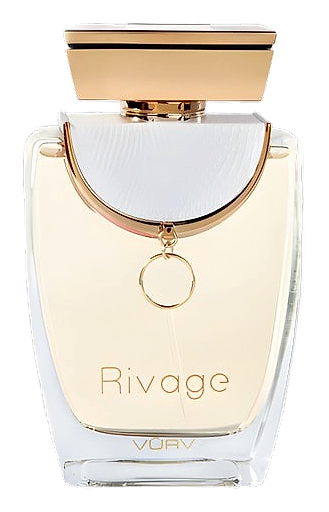
Rivage arrived in 2014 as a masculine composition from VÛRV, and the name itself suggests a shore, a border where something meets something else, and the composition reads exactly like that. Bergamot and violet at the entry, artemisia and caraway adding that herbal-green bite, then a layered heart of Bulgarian rose, sage, iris, and pepper that refuses to commit to one mood. The base settles into patchouli, opoponax, amber, and civet, with vanilla softening what would otherwise be a much rougher landing. The opening is cool and slightly bitter from the violet, sharpened by the caraway's almost anise-like flicker, while the bergamot keeps things lifted instead of heavy.
What makes Rivage interesting is how it stacks its aromatics. Artemisia and caraway together create a bitter-green opening that most masculine designers avoid. Pair that with violet leaf, already an unusual choice for this category, and the first ten minutes smell closer to a cologne from another era. Then Bulgarian rose and Florentine iris enter the heart, which is where the composition earns its keep. That pairing gives the mid-phase a powdery, slightly soapy quality that balances the spice without neutralizing it. Civet in the base is the real story. It's polarizing, it's vintage-coded, and most modern masculine releases don't touch it. VÛRV used it. That tells you what kind of fragrance this is.
The evolution
The first spray hits with that sharp herbal snap. Artemisia and caraway arrive almost green, almost bitter, then the bergamot and pink pepper brighten the whole entry for about 20 minutes. Violet threads through underneath, giving it a cool, almost metallic softness that keeps the opening from being purely spicy. By the 30-minute mark, the heart has taken over. Bulgarian rose shows up dusty and a little waxy, sage adds a herbal sweetness, and the Florentine iris powdery-fies everything. The pepper, both pink and black, doesn't disappear. It just gets quieter. This is the most wearable window. Around the two-hour mark, the base settles. Indonesian patchouli is the load-bearing wall here, earthy and slightly damp. Amber and opoponax warm it up. Vanilla arrives, not as sweetness but as a smoothing agent. And then there's the civet. It doesn't announce itself. It just makes everything smell like skin that's been somewhere.
Cultural impact
Rivage arrived in 2014 carrying civet in its base, a material choice that still reads as a deliberate statement in a market where animalic notes have become increasingly rare in mainstream masculine releases. Wearers tend to describe it as a scent for someone who already knows what they want from fragrance, partly because the composition doesn't soften itself to please everyone. The civet isn't a whisper here; it has presence, giving the drydown a warmth and a slightly feral edge that lingers close to the skin.