
The Story
Why it exists.
The beginning
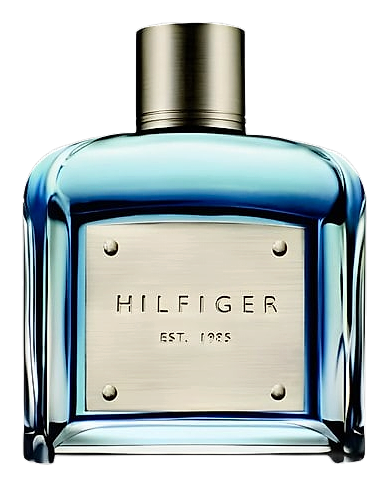
Hilfiger Est. 1985 arrived in 2008 as a declaration in fragrance form. The number in the name isn't just a date. It's a statement of continuity, a marker of where the brand has been and what it stands for. The fragrance was positioned for an audience that had been with the brand from the start, someone who wanted a scent that reflected their own evolution. The composition builds from crisp, citrus-driven opening into a warm, confident dry down, delivering a presence that feels earned rather than imposed. This is a fragrance that knows what it is without needing to shout.
What makes this work is the restraint. Papaya and pink grapefruit open tropical and sharp, the kind of brightness that announces itself loudly. But then leather arrives in the heart, alongside mahogany and turmeric. The tropical notes don't disappear. They get anchored. Mahogany gives the sweetness something to lean against. Turmeric adds warmth without heaviness. By the time the base settles, cashmere wood, suede, sandalwood, the whole composition has traded volume for depth. It's the difference between someone who dresses well and someone who always looks put-together. One knows the rules. The other doesn't think about them anymore.
The evolution
The opening hits bright. Papaya, pink grapefruit, and mandarin orange create a citrus-tropical impression that feels almost effervescent. Rosemary keeps it from being sweet. As the composition develops, the heart introduces leather, and it doesn't apologize. Mahogany, turmeric, a tea rose that refuses to be delicate. This is where the fragrance becomes itself. The drydown unfolds gradually as cashmere wood and suede wrap around sandalwood and tonka bean. The papaya doesn't disappear, it lingers underneath, a ghost of the opening in the base. Each layer builds on the last, creating a scent that feels both fresh and grounded, lively and composed. The overall impression is one of confident, unhurried evolution.
Cultural impact
Hilfiger Est. 1985 arrived with a specific audience in mind, those who wanted a fragrance that matched where they were in life. Reviewers described it as a college scent, others as an everyday workhorse. The positioning wasn't about aspiration. It was about presence, about showing up consistently and delivering. Though discontinued, the fragrance maintained a quiet reputation among those who discovered it. Some scents become rare simply because they were never meant to be everywhere.