The Story
Why it exists.
The beginning
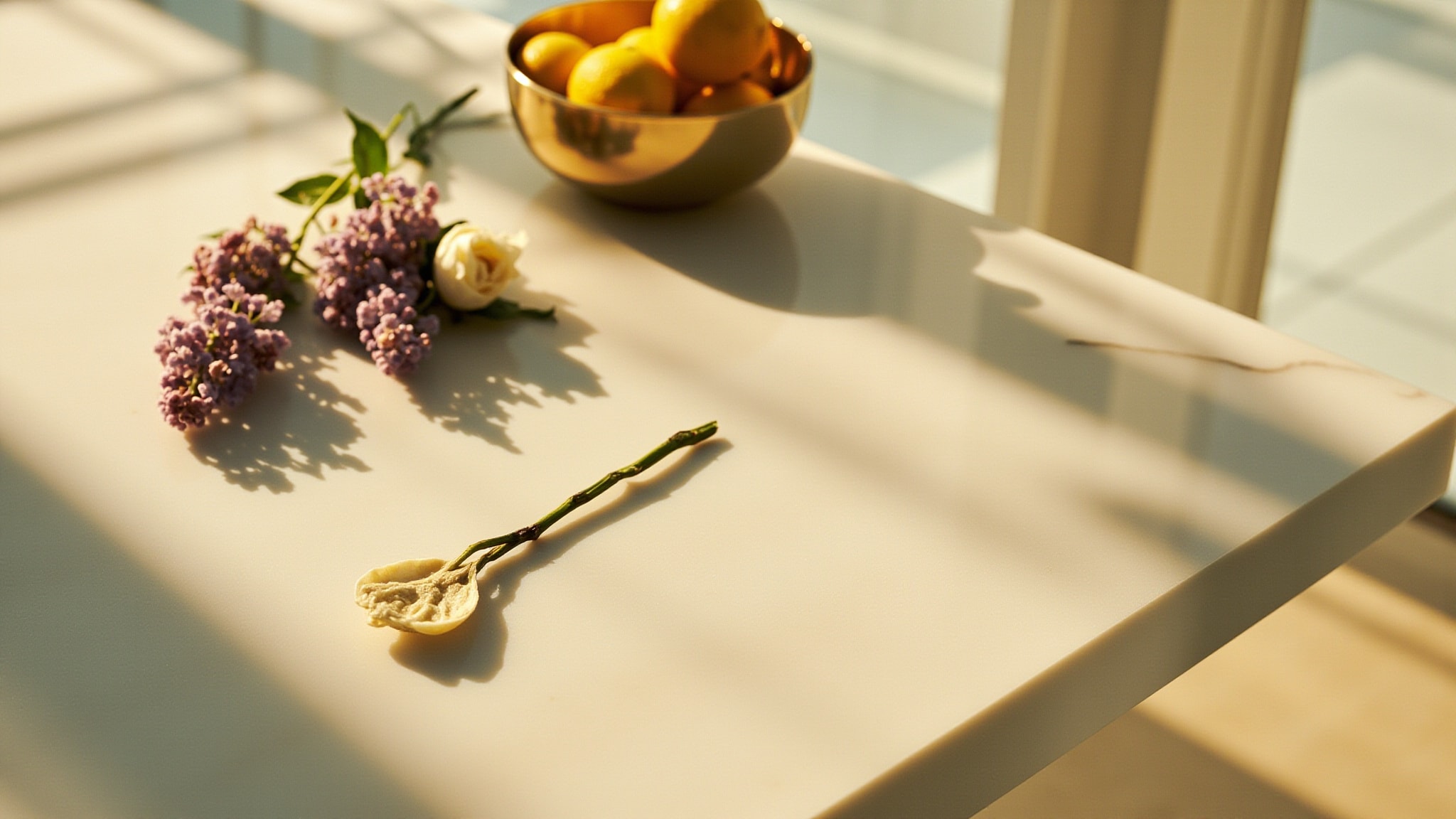
Ambrosea arrived in 2013, one of the early compositions from The Fragrance Kitchen out of Kuwait. It reads as a deliberate reach toward the lighter end of the catalog, a floral green composition by design, tipping toward white petals and green leaves. The opening is a sharp, almost bitter rush of galbanum, the kind of green that smells like a stem snapped between fingers, cool and slightly resinous before the florals settle in. Lilac and the supporting florals arrive in a soft, watery wash, vegetal and pale, more reminiscent of something cut from a living plant than a classic rose-jasmine bouquet.
What makes Ambrosea interesting is the galbanum choice, a note that carries a distinctly bitter, almost metallic greenness and does not behave like the sweeter florals around it. Pairing it with lilac, which itself has a slightly vegetal, watery quality, means the heart of the fragrance reads less like a classic rose-jasmine bouquet and more like something cut from a living plant, all crisp edges and pale green sap.
The evolution
The first thirty minutes are dominated by galbanum and bergamot, a sharp, almost bitter green that is closer to crushed stems and lemon zest than to any recognizable flower. There's a coolness here that feels more like early April than late spring, and it has a certain austerity to it. As the citrus softens over the next hour, the lilac and jasmine begin to surface, but they never fully take over. The galbanum keeps its grip throughout the heart, lending the florals a faintly bruised, herbal quality rather than the usual creamy sweetness. Rose appears late in the heart, more as a suggestion than a statement. Around the three-hour mark the composition shifts into its final register. Cedar and vetiver take over the structure while white musk softens the edges. The green recedes but never fully disappears, leaving a clean, slightly dry, skin-close scent that reads more like freshly laundered linen than any traditional floral drydown.
Cultural impact
Ambrosea represents the lighter, greener end of what the house can produce, a galbanum-forward floral that has earned a quiet following among wearers who treat green notes as the more interesting category. It appeals to those who want floral discipline rather than floral generosity, the kind of composition that rewards attention rather than announcing itself across a room. There's a particular pleasure in wearing something this restrained, the way the bitter greenness of the galbanum keeps the florals honest, refusing to let them tip into sweetness or powder.