
The Story
Why it exists.
The beginning
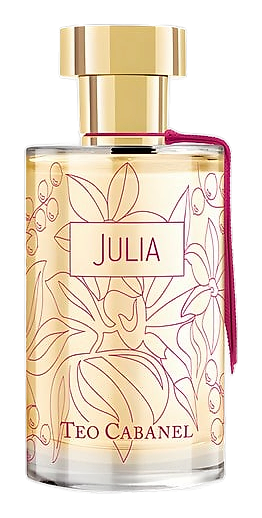
Julia is a fruity-floral from Jean-François Latty. The composition layers tart fruit against soft powder, green stems against warm skin. What emerged wasn't a fragrance about romance as a concept. It was about the moment right before. The structure is built around contrast, the tart and the soft, the green and the warm existing in the same breath. It's a fragrance that earns its restraint by refusing to announce itself, choosing instead to arrive quietly and linger without demanding attention.
What makes Julia unusual is how the rhubarb leaf reads on skin. In the bottle, it promises something sharp and vegetal. The green note frames the blackcurrant rather than competing with it, creating an opening that feels both fresh and unexpected. The raspberry in the base does similar quiet work, less a recognizable fruit note and more a suggestion of sweetness that blurs the line between the florals above and the woody warmth below. This is not a fragrance that announces its ingredients.
The evolution
The opening hits bright and sour, blackcurrant with enough mandarin to keep it from tipping into candy. The rhubarb leaf reads more like green air than actual rhubarb, a fleeting coolness that passes within minutes. By the time you reach for your wrist, the florals are already arriving. Jasmine and hyacinth arrive together, transparent rather than heavy, with violet's powdery warmth threading through like a bass note you almost don't notice until it's gone. The drydown is where Julia earns its reputation. Sandalwood and musk settle close, skin-warm rather than skin-strong. The raspberry doesn't disappear; it deepens into something jammy and quiet. On skin, it lasts well, and on fabric it fades to something soft and sweet that lingers until the next wash.
Cultural impact
Julia arrived in 2005 as part of Teo Cabanel's collection. At a time when fruity-florals were becoming a mainstream staple, Julia offered a more restrained interpretation. The use of rhubarb leaf as a primary top note was relatively uncommon, introducing a sharper, more unexpected entry point compared to conventional citrus or berry openings. This choice set it apart within its genre, offering something that felt more considered than typical releases of the period.