
The Story
Why it exists.
The beginning
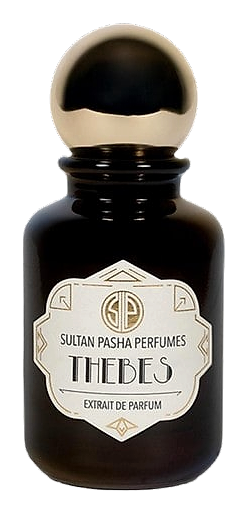
Thebes was the ancient Egyptian capital, a city of immense royal tombs where the dead waited between worlds, and where the living performed rituals to guide them there. Sultan Pasha built this fragrance around that threshold: the moment between breath and silence, between presence and memory. The fragrance is designed to feel like entering that space, the initial coldness of sealed air, then the gradual warmth of jasmine and rose arriving as if summoned, and finally the grounding of vetiver and ambergris as the scent of skin touched by time. The composition unfolds across hours, revealing layer after layer of detail that rewards close attention, with florals that bloom against a backdrop of mineral and resinous warmth.
What separates Thebes from a standard floral is the orris butter at its heart, giving the florals a quality that feels found rather than composed. Here it does the quiet work of turning everything powdery, its iris character lending a dusty, contemplative quality to the composition. Vetiver plays a similar structural role in the base: mineral, earthy, and relentlessly itself. Where most fragrances let vetiver dissolve into a generic woody warmth, Thebes lets it stand alone, asserting itself through the drydown with root-like intensity that refuses to soften.
The evolution
The opening arrives sharp and formal: aldehydes lifting bergamot and rosemary into the air like incense being lit in a closed room. For a considerable time the scent reads like a conversation, measured, deliberate, asking you to pay attention. Then the aldehydic edge softens and the floral heart emerges: muguet first, then jasmine, then the dusty rose that becomes the defining character of the middle phase. The orris does not bloom so much as settle, powdery, dense, grounding the florals in something earthier than sweetness. As the base takes over, vetiver anchors everything, its mineral character cutting through the floral warmth like light through a high window. Amber and ambergris layer in slowly, adding warmth and a marine-animalic depth that feels earned rather than constructed.
Cultural impact
Thebes is a fragrance that rewards close attention rather than making its presence known across a room. Its composition unfolds over hours, revealing detail after detail to the wearer who takes the time to notice. The florals, jasmine, rose, and muguet, create a heart that is powdery and contemplative, grounded by mineral vetiver and warmed by ambergris in the drydown. Oakmoss adds a subtle mossy quality to the base without tipping into vintage territory. This is a fragrance built for those who appreciate complexity, who want something that reveals itself gradually rather than announcing itself immediately.
The House
Sultan Pasha PerfumesSultan Pasha Perfumes is a London-based independent fragrance house specializing in artisanal attars, which are traditional oil-based perfumes. The brand operates from the United Kingdom and crafts fragrances using rare natural ingredients. Sultan Pasha built the house after years of dedicated work in perfumery, eventually launching the brand in collaboration with perfumer Christian Carbonnel. The collection includes recent releases such as Joyeux, Quintessentially Amber, Irisoir, and Thebes, all introduced in 2025. The perfumer draws on his multicultural upbringing across Bangladesh and London, which shaped his palate and appreciation for aromatic traditions. As an independent house, Sultan Pasha Perfumes maintains direct control over formulation and sourcing, allowing for meticulous attention to ingredient quality and fragrance composition.
The Creator
Sultan PashaSultan favors a laboratory‑like precision, layering accords in a stepwise fashion that mirrors a chemical reaction. He often begins with a bold base—amber, labdanum, or oud—then adds a bright middle such as chrysanthemum, cardamom, or incense.