The Story
Why it exists.
The beginning
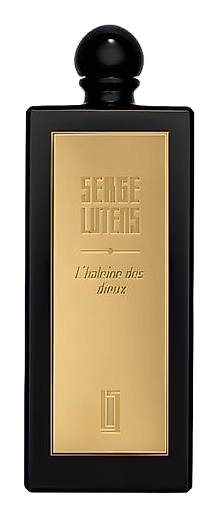
L'Haleine des Dieux arrived in 2015, a release that sits within Serge Lutens' Section d'Or, the gilded stratum the house reserves for its most singular work. The name translates to "the breath of the gods." The inspiration was gypsophila, baby's breath, that cloud of tiny white flowers florists use to bulk up a bouquet. Lutens himself described the intent: the volume that misty white creates, a breath. Then, in his characteristically theatrical way, he added: "but in actual fact, I am God, the Devil and a woman." Christopher Sheldrake composed it, translating that cryptic brief into something wearable. The result is less a flower tribute and more a meditation on what divinity might actually smell like, if divinity were warm-blooded and slightly transgressive.
What makes this composition interesting is its restraint within opulence. The main accords read as spicy-resinous, amber, and musky, but the actual note list is tight: amber, sage, leather, labdanum, vanilla, balsam fir, musk, and cashmeran. No bloom, no citrus, nothing to announce itself. Instead, Sheldrake builds the structure around labdanum and amber, two materials that anchor the composition in warmth, and threads fir and sage through them like cold air through a warm room. The cashmeran lends a softness at the edges, a gentle suede-like haze that blurs any sharp transitions.
The evolution
On skin, L'Haleine des Dieux opens with a pale, almost milky woodiness that reads as bread grain soaked in cream, an unexpected first impression for something this resinous. Within fifteen minutes, the fir arrives, dry and coniferous, cutting through the softness like winter light through a stained-glass window. Sage follows, herbal and slightly sharp, keeping the composition from going syrupy. The heart is where labdanum and amber lock in: warm, sticky, animalic without being dirty. Leather surfaces quietly, not as a jacket but as the ghost of one, a memory of wearing something close to the body for years. The vanilla is barely there, a sweetness more sensed than tasted. By hour three, the composition has compressed into something intimate: cashmeran and musk pulling everything close to skin, the fir still breathing faintly in the background. At six to eight hours, what's left is a dry, warm amber haze, the kind of scent that greets you on a scarf the next morning.
Cultural impact
L'Haleine des Dieux sits within the Section d'Or, Lutens' gilded sub-collection, a grouping that distinguishes these releases within the house's broader catalogue. Within the house's range, it occupies a contemplative register, more inward-turning than the spicy declarations of earlier Lutens work, less narrative-driven than some of the more theatrical compositions. The fragrance reads as art-object rather than accessory. It suits someone comfortable being asked "what are you wearing?" and answering with a story rather than a brand name.
The House
Serge LutensSerge Lutens reshaped the boundaries of perfumery. A photographer, makeup artist, and image-maker for Christian Dior and Shiseido before he ever blended a note, Lutens brought an artist's eye to fragrance. His house, founded under Shiseido in 2000, offers over 80 olfactory stories that resist easy categorization. These are perfumes that smell like memory, like places, like emotion itself.
The Creator
Christopher SheldrakeSheldrake's olfactive identity resists easy classification, spanning oriental grandeur, gothic florals, and translucent musks with apparent effortlessness. His Serge Lutens work particularly reveals a maximalist streak, with fragrances like Muscs Koublai Khan delivering overwh…