The Story
Why it exists.
The beginning
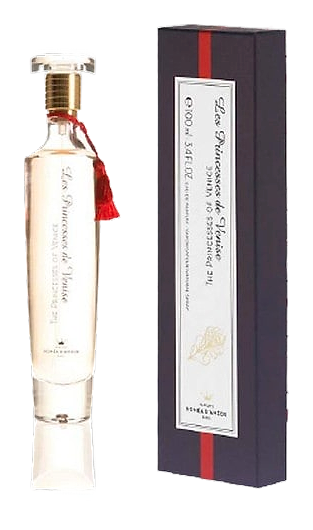
Pierre Bourdon created The Princess of Venice as part of Roméa d'Améor's 2008 debut collection, seven fragrances, each a portrait of a remarkable woman from history. The composition opens bright and approachable but doesn't stay surface-level. The Princess of Venice wears that same confidence, fruity-floral, yes, but with a structural complexity that rewards attention. The initial impression is immediately inviting, yet the scent evolves as it settles, revealing layers that unfold gradually over the first hour. There's a balance struck here between accessibility and depth, between the immediate appeal of fruit notes and the subtle complexity that emerges with wear.
The top notes arrive in force, pineapple, melon, blackcurrant, but cloves introduce a warm spice that cuts through before you can call it frivolous. The heart layers jasmine and champaca over orange blossom, creating a white floral density that deepens the sweetness rather than competing with it. Blackcurrant reappears in the heart notes, extending its tartness as it transforms from crisp fruit to something more bud-like. The overall effect is a fruity-floral that refuses to stay on the surface, layering complexity without becoming heavy.
The evolution
The first ten minutes hit like a fruit market at dawn. Pineapple leads, juicy, slightly tart, with melon softening the edges. Blackcurrant adds bite. Brazilian orange and grapefruit give it a citrus lift that prevents the sweetness from pooling. The cloves are there from the start, hovering underneath like a warm suggestion rather than a statement. Then the florals begin their slow takeover. Jasmine arrives first, cream-colored and insistent. Orange blossom follows, bringing a cleaner, more soapy floral quality that pushes against the tropical sweetness. The fruits don't disappear, they become a substrate, holding the florals up. By the second hour, the composition has shifted. The top notes have softened into the skin, and the heart is fully in command. Champaca, rich, almost ylang-adjacent, layers over jasmine. The blackcurrant has evolved from fresh fruit to bud, a green-tart shadow beneath the florals. This middle phase is where The Princess of Venice earns its complexity. It smells like a different fragrance than the opening suggested.
Cultural impact
Among the seven inaugural releases, The Princess of Venice presents itself as a bright, fruity-floral composition, immediately appealing. The use of cloves and mastic in what could have been a straightforward fruit-floral shows a kind of restraint. The fragrance occupies an interesting position: accessible enough to welcome newcomers, complex enough to reward those who know what they're smelling for. That's a narrow lane to walk, and the composition walks it.