The Story
Why it exists.
The beginning
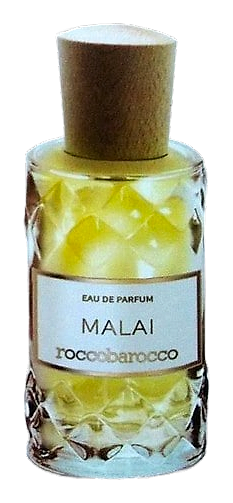
Malai arrived in 2017 as part of Roccobarocco's broader exploration of the oriental space. The brand has always approached fragrance as something that extends beyond the bottle, and Malai represents one of the bolder swings in that catalog. This is weight. Smoke, balsam, and iris given the room to occupy space rather than hint at it. Malai doesn't play in the registers most associate with easy reachability. Instead it asks for attention, pulling you into a dense composition that rewards close wearing. The oriental accord that anchors Malai runs through the entire structure, from the herbal green opening right down to the resin-heavy base. That sustained thread is what gives the fragrance its coherence.
What's interesting here is the ylang-ylang and iris pairing. Ylang brings that tropical, almost carnal sweetness, but the iris cools it, pulls it back into powder and discipline. The contrast between those two materials is what gives the heart of Malai its tension. Angelica does something similar in the opening. It has a green, musky, almost rooty quality that gives the orange and coriander something to push against rather than just a sparkling citrus top. Without that green anchor, the whole thing would float off into something bright and forgettable.
The evolution
The opening is surprisingly bright. Angelica's green bite, orange zest, and coriander's warm spice give Malai a deceptively fresh opening that doesn't telegraph what's coming. If you smelled someone in passing during this window, you'd think citrus cologne. Then the ylang and iris start their takeover, and the whole composition shifts register. The sweetness thickens, the powder settles in, and the orange recedes into a kind of candied shadow rather than disappearing outright. That transition happens gradually, almost imperceptibly, which is part of what makes Malai so engaging. By the one-hour mark, you're fully in the drydown. Amber and myrrh take the lead, with benzoin adding that vanilla-leaning sweetness and Peru balsam giving it a faintly leathery, almost smoky undertone.
Cultural impact
Malai stands as one of the more contemplative entries in the Roccobarocco catalog. The fragrance leans into incense and resin in a way that gives it a solemn, grounded quality. Wearers describe it as a chapel scent, something that reads serious and rooted rather than party-ready. That sensibility runs through every phase of the composition, from the green herbal opening to the golden resin base. The incense quality is what sets Malai apart from many of the sweeter, more accessible orientals on the market.