The Story
Why it exists.
The beginning
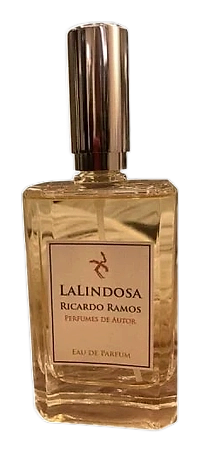
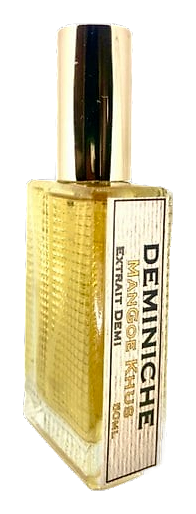
Mangoe Khus arrived in 2020 from Ricardo Ramos Perfumes de Autor, a house whose compositional style leans toward unusual regional pairings and slow-burn conceptual work. The scent was created by perfumer Jorge Lee, building around two crops that grow on the same island: green mango and Haitian vetiver (khus), both ranked among Haiti's signature agricultural exports. Ramos framed the composition around their shared tropical character, treating two crops that rarely share a fragrance bottle as the entire structural idea. The accord translates the feeling of biting into a just-cut mango while standing in a field of vetiver grass, the green sweetness and the earthy root meeting on the same tongue.
The pairing itself is the point. Green mango brings a sharp, almost unripe fruit bite, nothing like the syrupy pulp of a ripe one. Haitian vetiver adds a smoky, rooty depth that most green fragrances never touch. Together they land somewhere stranger than the usual tropical playbook, threading a chypre structural logic underneath bright fruit and white floral. The gardenia heart reinforces that white-floral-on-earth tension, while cardamom and black pepper keep the sweetness honest. The result reads less like a beach scent and more like an island mapped by someone who read the footnotes.
The evolution
The opening sprints. Grapefruit and vervain hit sharp and clean within the first 15 minutes, apricot softening the edges while green mango arrives almost bruised and tart. By the 30-minute mark the citrus has thinned and the gardenia starts blooming through, creamy and cool against the still-bright fruit. The 1-3 hour window is where the composition finds its footing: Haitian vetiver grounds the white floral, cardamom warms it from underneath, and black pepper adds a low, persistent flicker. The chypre base reveals itself around hour 3: oakmoss and labdanum thicken the texture, coumarin adds a hay-like sweetness, and leather settles in like something you didn't notice until you tried to leave. What survives longest is the leather-oakmoss close, warm and faintly sweet, still carrying a ghost of the mango that opened the whole thing.
Cultural impact
Mangoe Khus sits at an unusual intersection: the chypre category, a structure most modern perfumers use sparingly, and the tropical genre, which tends to default to familiar fruit shorthand. By naming a composition after two Haitian agricultural products and building the structure around their shared geography, the house treats fragrance as cultural scholarship rather than escapism. It's a fragrance for someone who wants their mango to come with footnotes. The chypre skeleton underneath gives the scent a gravity that most tropical releases never reach, while the gardenia and pepper keep things from drifting into austere territory.