
The Story
Why it exists.
The beginning
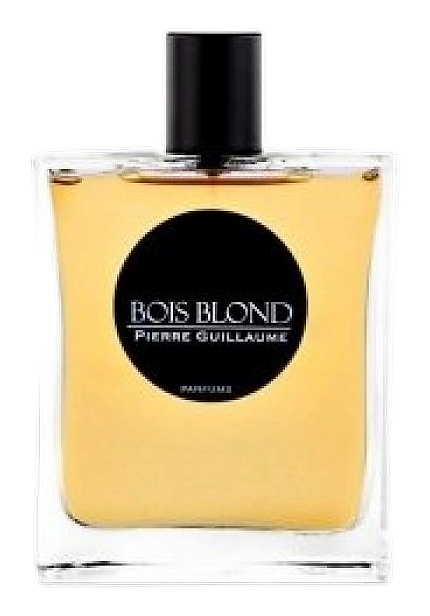
Bois Blond arrived in 2006, one of the early compositions from Pierre Guillaume Paris. The house had formally launched the year prior, and this scent belongs to that first wave of work, the kind of careful, considered release that defines an independent perfumer's opening chapter. The name translates loosely to blonde wood, which captures something true about how the fragrance behaves on skin. It opens green and bright, almost like sunlight filtering through fresh-cut grass, then softens gradually into warmer tones, golden, sun-warmed, and quietly smoky by the late drydown. That arc from crisp to mellow is the whole point. Pierre Guillaume composed the scent himself, working independently on the formula rather than leaning on outside development.
What makes Bois Blond structurally interesting is the tension between galbanum and blond tobacco. Galbanum is one of perfumery's sharpest green materials, almost bitter, with a resinous bite that recalls crushed stems and pine sap. Blond tobacco, by contrast, is warm, dry, and faintly sweet. The two shouldn't sit comfortably together, at least not on paper. But here they do, woven through a shared architecture that keeps neither one dominant.
The evolution
The first ten minutes are all green. Galbanum cuts through with that sharp, almost bitter edge, layered over fresh grass that smells just-cut and slightly resinous. The opening has an immediacy to it, almost agricultural, the kind of scent that recalls stems being snapped rather than anything delicate. The transition starts around the thirty-minute mark, when the galbanum begins to recede and the blond tobacco surfaces, pulling the composition into warmer territory. By the one-hour point, hay and dry woods take over, and the scent shifts from a green field to something more like sun-dried straw in an old barn. The amber arrives quietly, never loud, never gourmand, just a soft golden warmth underneath the tobacco and hay. There's no sweetness here, no honeyed edge, just warmth that reads as natural rather than constructed.
Cultural impact
Bois Blond holds a particular place within the early catalogue, representing the kind of scent a collector reaches for rather than something designed for broad commercial reach. It wears like a private composition, closer to a personal indulgence than a public statement. The green-tobacco-hay combination sets it apart from more conventional releases, offering something that feels hand-shaped rather than market-tested. That kind of positioning speaks to wearers who treat fragrance as a form of self-expression, something chosen for its own sake rather than its social signalling power.