The Story
Why it exists.
The beginning
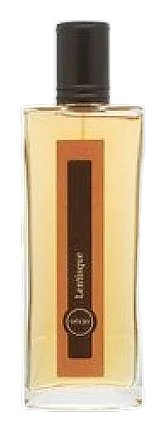
Jacques Chabert, an established Grasse nose with decades of regional knowledge, imagined Lentisque in 2007 before Parfums 06130 formally launched in 2018. His brief was deceptively simple: translate the lentisque shrub's character into wearable form. The plant grows wild on limestone slopes above Grasse and along Mediterranean coastlines, thriving in harsh conditions where it develops a distinctive resinous quality. Rather than attempting literal botanical extraction, Chabert chose to evoke the shrub's spirit through mastic resin, creating a green, slightly biting opening that he balanced against sun-warmed melon sweetness and a fleeting jasmine accent. The iris and rose heart was added to provide softness, and a vetiver-amber-muskmushroom completes the picture: warm, animalic, and enduring.
Chabert selected each note for a specific reason. Mastic and lentisque are non-negotiable anchors of the composition, establishing the fragrance's Mediterranean identity from the first spray. Ambrette bridges the gap between fresh and warm, providing an aromatic musks that prevents the opening from feeling too sharp or purely medicinal. Melon and jasmine soften the initial impact, adding sweetness and translucency so the fragrance is not aggressively green. Iris and rose form the bridge between the distinctively regional top notes and the grounding base, their powdery floralcy offering contrast without distraction.
The evolution
Lentisque's trajectory is a narrative of softening. The opening hour sees mastic's resinous greenness battle against ambrette's musky warmth and melon's fleeting sweetness, a tension that resolves as jasmine adds a cool aromatic layer. By the second stage, iris and rose dominate, transforming the fragrance from something jagged and Mediterranean into something polished and almost nostalgic. As hours pass, vetiver's earthy smokiness slowly rises from the base, amber draws warmth to the surface, and musk wraps everything in a skin-close embrace. The green mastic note never fully disappears; traces of it persist into the final stages, tying the evolution together like a Mediterranean memory that refuses to fade entirely.
Cultural impact
Lentisque emerged at a time when green‑floral compositions were gaining traction in niche perfumery, reflecting a broader cultural shift toward naturalistic and Mediterranean-inspired scents. Its use of lentisque resin resonated with consumers seeking authenticity and a connection to coastal landscapes, while the ambrette seed added a subtle, earthy nuance that appealed to the growing demand for sustainable, plant‑derived ingredients. Over the years, the fragrance has been cited in discussions about the revival of classic Mediterranean accords, influencing subsequent releases that aim to capture sun‑kissed garden atmospheres without relying on overtly synthetic notes.