
The Story
Why it exists.
The beginning
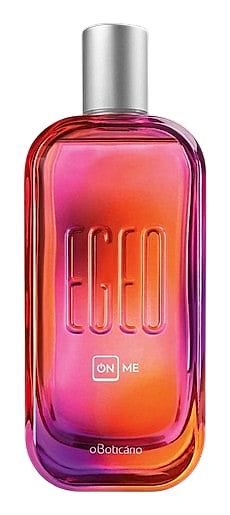
Egeo On Me arrived in 2019 as something genuinely new, not in material, but in method. The fragrance was developed with Philyra, an artificial intelligence system created through a collaboration between IBM and Symrise. David Apel, who had built a career translating olfactory patterns into wearable compositions, worked with the system not as a replacement for instinct but as an expansion of it. Philyra analyzed thousands of fragrance formulas, identifying combinations that human perfumers had not yet explored. Apel then shaped those possibilities into a coherent scent, one that felt familiar in its warmth but fresh in its structure. The result was Egeo On Me: sweet, fruity, floral, with a vanillapowdery base that reads as both comforting and contemporary.
What makes the composition structurally unusual is the sheer density of the opening tier, eleven materials share top billing, yet on skin the result is legible rather than cluttered. The AI surfaced pairings that might not occur intuitively: aniseed beneath the pineapple, cucumber alongside the bergamot, passion flower anchoring the florals against a sandalwood base. Sweet without tipping into confectionery. Floral without dissolving into air. The balance is the point, and the balance is what Philyra was built to find. David Apel then did what machines cannot: he decided which suggestions actually smelled like something worth wearing.
The evolution
The opening announces itself immediately, bergamot and pineapple with a clean, bright citrus crackle. Apple and melon follow within minutes, the fruit note reading as tropical rather than orchard-sweet. Then the aniseed. It arrives quietly, just enough to prick the sweetness and remind you this isn't a straightforward gourmand. The green cucumber note threads through the first thirty minutes, keeping the composition airy when the sweetness might otherwise overwhelm. The white florals, tuberose leading, jasmine in support, arrive at the thirty-minute mark and take over the mid-section, softened by raspberry and the green clarity of lily of the valley. The transition from fruit to floral feels deliberate rather than abrupt. As the florals begin to recede, the base announces itself: toffee and vanilla first, warm and edible, then amber settling underneath to add depth. Sandalwood and patchouli arrive late, two to three hours in, to ground the sweetness in something dry and woody. Musk holds the entire drydown close to the skin, adding intimacy without weight.
Cultural impact
Egeo On Me holds a specific place in fragrance history: it was one of the first commercial fragrances developed with artificial intelligence. The Philyra system, built by IBM and Symrise, analyzed thousands of formulas to find combinations human perfumers had not yet explored. David Apel then translated those findings into a wearable composition. The result is a fragrance that functions as both a commercial scent and a proof of concept, a demonstration that machine learning can expand the perfumer's palette without replacing the perfumer's judgment. For O Boticário, it signaled a willingness to experiment with method as well as material, positioning the brand as curious rather than conservative.