
The Story
Why it exists.
The beginning
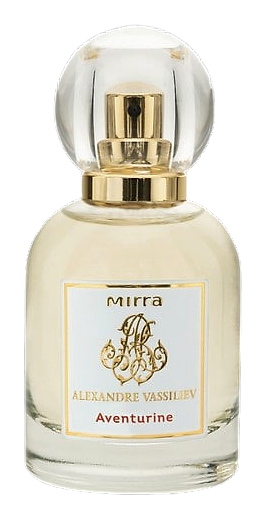
Aventurine arrived in 2020 from Sébastien Martin, a perfumer whose hand shows in the composition's restraint. The name borrows from the quartz prized for its soft inclusions, those threads and clouds suspended inside pale stone. There's no flash to Aventurine either. What looks like a simple floral-woody at first glance reveals more on closer attention: a musk that never announces itself, a vanilla that waits until the room is quiet to speak.
The choice of ambrette over a louder white musk is the move that defines Aventurine. Ambrette, also called musk mallow, carries a warmth that's almost vegetal, seed-like rather than sweet. Paired with cedarwood and ylang-ylang, it builds a heart that reads floral but wears woodier. Pink pepper opens without aggression. The red fruits add ripeness without pushing into gourmand territory. Every ingredient earns its place.
The evolution
On skin, the opening is brief but intentional. Bergamot and pink pepper land together, bright and slightly cool, for the first 15 minutes. The citrus warmth fades quickly, handing off to ylang-ylang and the red fruit note, which arrives more as suggestion than statement. The cedar is doing quiet structural work underneath, giving the floral phase something to lean against. By the two-hour mark, the composition has shifted almost entirely into its base: vanilla and ambrette musk, with dry woods holding the silhouette. The vanilla doesn't get louder as the hours pass. It gets softer. What remains after six hours is a skin-close warmth, more ambrette than vanilla, more suggestion than perfume. On fabric, particularly wool or cotton scarves, it lingers noticeably longer, sometimes into the next day, in a quieter register.
Cultural impact
Aventurine is a composition built around closeness. Vanilla settles into the base in a way that feels like skin-warmth rather than sweetness, and the musk underneath keeps the whole thing anchored, quiet, grounded. The dry woods that close the fragrance give it shape without giving it volume, so it reads as something worn rather than something displayed. You notice it most when you're near the person wearing it, the way a favorite sweater carries a trace of its wearer long after it's been folded away.