The Story
Why it exists.
The beginning
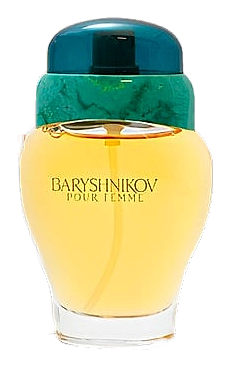
In 1995, Baryshnikov Pour Femme arrived as the second women's scent in a fragrance line built on the dancer's belief that movement and scent share a language. The original Misha had launched in 1989, a personal introduction; the masculine Baryshnikov followed in 1991. Pour Femme was positioned for a specific audience, women who moved through the world with the same quiet authority Baryshnikov brought to the stage. It wasn't a departure from the line's restrained aesthetic. It was an expansion of it, into warmer territory, with florals that nodded to classicism without becoming nostalgic.
What sets Pour Femme apart from its siblings is the tension in its heart. Carnation and lavender are uncommon bedfellows, carnation carries a peppery heat, lavender a cool, herbaceous clarity. They're opposing forces that shouldn't work, and yet the addition of lily of the valley, peach, and violet tugs them toward something cohesive. The result is a heart that feels both structured and soft. Beneath it, the amber-musky base gives the florals somewhere to land, with vanilla offering warmth without sweetness overpowering the composition. It's an Oriental Floral that earns its classification.
The evolution
The citrus opening lasts maybe five minutes, a bright clementine flash, then gone. What replaces it is more interesting: carnation asserts itself early, green and slightly medicinal, before lavender cools the whole thing down. The florals layer in gradually, violet and rose arriving last, each one settling into the next. By the second hour, the amber-musky base takes over. This is where the fragrance lives longest, a warm, skin-close presence that stays moderate in projection but refuses to disappear. The vanilla in the drydown becomes more pronounced as hours pass, eventually edging into something almost creamy. On fabric, it lingers into the next day.
Cultural impact
Pour Femme occupies a particular space in the late-nineties fragrance landscape: too formal for casual wear, too warm for purely daytime use. It found its audience among women who wanted a fragrance with posture, something that worked in rooms where presence mattered. The line was never a commercial juggernaut, but it earned a loyal following among those who valued restraint over projection.