Mikhail Baryshnikov
Mikhail Baryshnikov arrived in the West in 1974, a defector from the Soviet Union whose body had already rewritten what ballet could be. Born in Riga in 1948 to Russian parents, he trained at the Vaganova School and joined the Kirov Ballet before his dramatic escape opened doors to American and Canadian stages. By the late 1980s, his artistic ambitions had outgrown even the grandest stages. He launched a licensing and marketing company that brought his name to clothing and, crucially, fragrance. In 1989, he introduced Misha, a perfume that carried the same sensibility as his dancing: disciplined yet sensuous, spare but deeply felt. The scent arrived at Saks Fifth Avenue in Beverly Hills, where he signed autographs for more than a thousand fans, a testament to how completely his identity had transcended any single art form. Baryshnikov never approached perfume as a celebrity afterthought. He understood that scent, like movement, communicates something the mind cannot quite name.
The hits
Notable creations

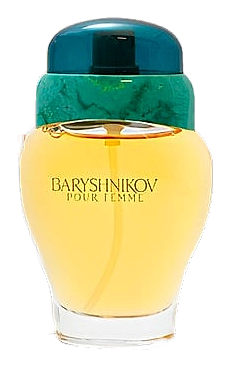
The signature
How Mikhail composes
The Misha line favors a refined modernism. His compositions tend toward crisp florals balanced against warmer woods and subtle spice, creating scents that feel both immediate and lasting. He gravitates toward ingredients that suggest restraint rather than abundance, using quality over quantity to achieve presence. The result reads as sophisticated without pretension, luxury that does not announce itself. His style echoes the precision of his ballet training: every element in service of the whole, nothing wasted, nothing merely decorative.
Philosophy
What drives Mikhail
Baryshnikov has spoken often about the danger of repetition, of falling back on what already works. His fragrances reflect this restlessness. He seems drawn to compositions that shift and breathe, that hold tension between opposing forces. Where another celebrity might opt for safe, familiar territory, Baryshnikov consistently moved toward complexity, toward fragrance that asks something of its wearer. His approach treats scent as an extension of physical presence, the way his performances always felt like a conversation between the body and the space it occupied. Each fragrance becomes a kind of movement, evolving on skin rather than simply announcing itself.
The houses