
The Story
Why it exists.
The beginning
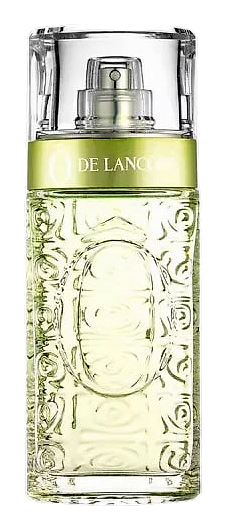
Lancôme introduced O pour Homme in 1996 as the masculine counterpart to its celebrated O de Lancôme. Where the original read as a cool, luminous statement in white florals and watery greens, the men's version translates that same instinct into something greener, sharper, more mineral. O pour Homme sits squarely within the broader house tradition of treating fragrance as a refined daily gesture rather than a loud one. The opening hits with an almost mentholated snap: bergamot and spearmint cut straight through, bright enough to read on a cold morning, brisk enough to wake the wearer up before the commute even starts. That mint doesn't stick around in isolation for long, though.
What makes the composition worth noticing is the bamboo note, a material difficult to render convincingly and almost never this restrained. Most bamboo accords lean sweet, somewhere between coconut water and wet grass. Lancôme's choice pulls the note toward its crisper, almost papery edge, paired with Brazilian rosewood and a faint wheat husk underneath that gives the drydown a dusty, almost starchy texture. Mint arrives early enough to read as an accent rather than a theme. Sandalwood does the structural work. The whole composition behaves like a palimpsest: layers writing over each other, never fully erasing what came before.
The evolution
The first thirty minutes are the coldest the fragrance will ever be. Bergamot and mint arrive fast, snapping the air open with the kind of brightness that reads almost mentholated before settling into something more herbal. Bamboo shows up inside ten minutes, carrying the composition toward a quieter, more vegetal register. An hour in, the sandalwood emerges through the green, warm and slightly creamy, and Brazilian rosewood adds a faint cedar-like dryness underneath. The wheat note surfaces around the two-hour mark as something almost nutty, a starchy warmth that keeps the drydown from going flat. After four or five hours the listed florals mix with the amber base into a soft, woody-musky trace, the green topnotes long gone but the structure still holding.
Cultural impact
O pour Homme holds a modest but dedicated following, often appreciated by wearers who value restraint over projection in a category that frequently goes the other direction. The fragrance rewards close quarters rather than distance, the kind of scent someone leans in to notice rather than one that announces itself across a room. That quality has given it a quietly persistent appeal. Bottles still surface in vintage channels and secondhand shops with enough scarcity to reward patient searching, and those who found it early tend to describe it with the kind of warmth usually reserved for a fragrance that took them by surprise.