
The Story
Why it exists.
The beginning
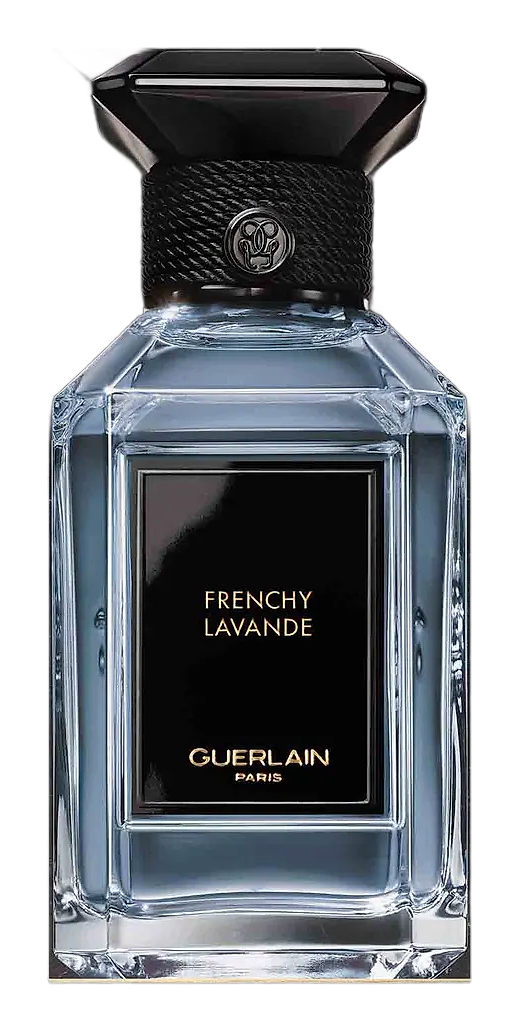
The renaming told the story before the scent could. Le Frenchy had charm, but Guerlain's 2021 repositioning stripped it back to essentials: lavender, green herbs, and the kind of citrus that sits close to the skin. Frenchy Lavande was born not as a reformulation, but as a restatement of intent, the same composition, now wearing its name with full confidence. The L'Art & La Matière collection holds fragrances that the house considers artistically complete, and this one earned its place there on the strength of what Delphine Jelk built: a lavender that refuses to be decorative. It smells like a place, not a concept, and that place is the south of France at the hour when the light turns golden and the herbs start releasing their oils into the warmth.
What makes this work is the tension that never resolves. The citrus in the opening doesn't disappear as the lavender grows, it hides inside it. Sage and petitgrain carry that thread through the heart, lending a verdant quality that persists even as the floral heart deepens. Then ambergris arrives in the drydown, not as a dramatic bass note but as a subtle warmth that lifts the whole composition off the skin. Tonka bean adds just enough sweetness to keep it wearable, while vetiver roots everything.
The evolution
The first twenty minutes belong to lemon verbena and bergamot, clean, sharp, almost astringent. A spritz of citrus over a bundle of fresh herbs. The sage arrives quietly, adding a slightly bitter edge that stops the opening from reading sweet or soapy. By the time the lavender takes over at around thirty minutes, the composition has already committed to its personality: this is green first, floral second, warm third. The heart holds for two to three hours, and the drydown, ambergris, vetiver, tonka, settles in for the final stretch. Four to six hours total on most skin. The vetiver is the tell. It lingers long after the lavender has softened, giving the wearer something dry and honest to remember.
Cultural impact
Frenchy Lavande entered Guerlain's L'Art & La Matière collection in 2021, a curated space reserved for fragrances the house considers artistically complete. The relaunch from Le Frenchy marked a quiet recalibration: Guerlain has long handled lavender with discretion, preferring to let it anchor compositions rather than dominate them. The 2017 original brought lavender into conversation with citrus and green aromatics in a way that felt distinctly modern, establishing a structure that other houses would later reference.
The House
GuerlainGuerlain stands as one of the oldest and most revered perfume houses in the world, founded in Paris in 1828 by Pierre-François-Pascal Guerlain. What began as a boutique on rue de Rivoli quickly became the preferred destination for Parisian society, attracting dandies and elegant women who sought custom-crafted fragrances. The house's influence grew to such heights that Guerlain earned the title of Official Perfumer to Napoleon III after presenting Eau de Cologne Impériale to Empress Eugénie as a wedding gift in 1853. This royal patronage marked the beginning of Guerlain's enduring association with European aristocracy, as the house went on to create fragrances for Queen Victoria and Queen Isabella II of Spain. Today, under the creative direction of Thierry Wasser, the fifth-generation perfumer, Guerlain continues to shape the landscape of fine fragrance with a portfolio spanning over 1,100 olfactory creations. The house remains headquartered at its legendary Champs-Élysées mansion, a historic monument that anchors Guerlain's position at the intersection of heritage and contemporary luxury.
The Creator
Delphine JelkJelk builds compositions around contrast and tension—warm, round, and inviting, yet never soft. Her signature leans heavily on iris, musks, and powdery facets that give her work a distinctive texture, like cashmere caught in amber.