The Story
Why it exists.
The beginning
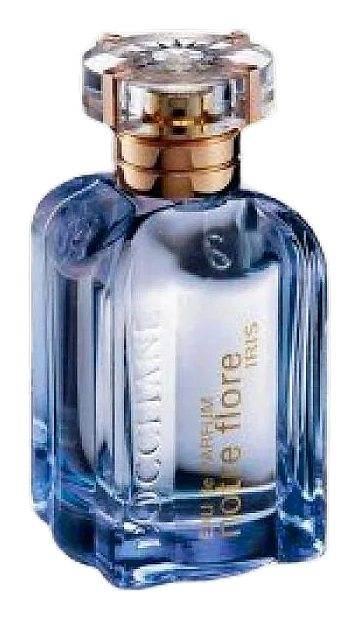
Notre Flore Iris arrived in 2007 as a fragrance from L'Occitane en Provence, a house with a long-standing interest in rendering Provençal botanicals as wearable compositions. The perfumer, Amandine Clerc-Marie, treated iris as a subject worthy of close attention. Iris presents a genuine challenge: it's almost impossible to render in a way that feels both transparent and grounded. The result is a fresh-floral iris that refuses the usual route. No heavy suede. No gourmand sweetness. Just the flower, surrounded by what grows near it, allowing the raw material to speak for itself without ornamentation or apology.
What makes this composition worth a second look is the restraint. Clerc-Marie kept the pyramid lean: Italian bergamot and pink pepper up top, galbanum and violet in the heart, papyrus and tonka bean underneath. The galbanum is the wildcard, sharp and green, almost bitter, threading through the composition with a kind of vegetal persistence that keeps the whole thing from collapsing into face powder. It's a technique used here to keep a botanical iris feeling alive on skin rather than archival.
The evolution
The first ten minutes belong to the galbanum and bergamot, a green flash that reads like stems snapped in a garden after rain, briefly sharpened by pink pepper. Then the iris and violet arrive together, and the composition shifts from herbaceous to soft-focus. This is the powdery phase most people expect, but it's never dry. The violet gives it body, almost a faint plumminess, and the iris keeps its cool, mineral quality. By the two-hour mark the papyrus begins to show, a dry, papery warmth that grounds the florals without darkening them. The tonka bean enters quietly underneath, adding a soft almond sweetness that never crosses into dessert territory. On skin the drydown unfolds slowly, fading to a close, clean trace of powder and warm wood, with the iris lingering longer than expected against cloth and softer fabrics.
Cultural impact
Within L'Occitane's catalogue, Notre Flore Iris stands out for its commitment to the cool, mineral quality of orris, offering a composition that prioritizes clarity and lift over density or heaviness. Wearers who shy away from iris often find this one approachable precisely because it sidesteps the heavy suede and vintage cosmetics associations that dominate the category. The fragrance reads as a study in restraint, a botanical portrait rather than a maximalist statement, which makes it versatile across seasons and occasions.
The House
L'Occitane en ProvenceL'Occitane en Provence is a French fragrance house rooted in the botanical traditions of southern France. Founded in 1976, the brand translates the scents of wild rosemary, lavender and almond into perfumes, body mists and skincare that feel like a walk through a Provençal market. Today the company ships its scented creations to more than 90 countries, yet each bottle still carries the imprint of the hills, stone houses and sun‑baked fields where the first essential oils were distilled. The line balances classic floral and warm amber notes with a modern sensibility for natural ingredients, offering a quiet alternative to the louder, synthetically driven offerings that dominate many shelves.
The Creator
Amandine Clerc-MarieWhile it's difficult to pin down a single, defining characteristic across her entire body of work, a certain smoothness and refinement seem to be consistent themes. She appears to favor well-blended compositions, where individual notes harmonize to create a cohesive whole.