The Story
Why it exists.
The beginning
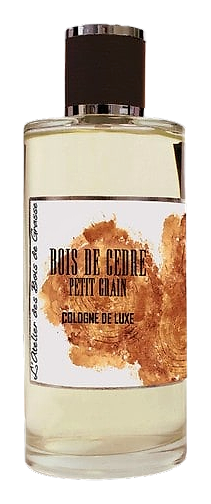
Bois de Cedre Petitgrain takes its name from two materials rooted in Grasse's workshop tradition. Petitgrain, derived from the leaves and twigs of the bitter orange tree, carries a green-bitter quality that cuts through the expected sweetness of citrus. The scent opens with this sharp, herbaceous character, an astringent freshness that feels both familiar and unexpected. Cedar brings warmth and restraint, the smell of aged wood and old paper. There's a dry, slightly dusty quality to it, like the inside of a cabinet where collections are stored. Together they form a conversation between brightness and depth, between the tree's fruit and its body. The petitgrain retains its presence throughout the development, never fully receding even as the cedar settles into its role.
The pairing of petitgrain and cedar is unusual. Petitgrain usually appears as a supporting note in citrus or fougère compositions, a background player that adds freshness without demanding attention. Here it leads instead, its bitter-green character sharpened by elemi resin, which contributes a subtle citrus-spice nuance that amplifies the petitgrain's edge. Cedar doesn't arrive immediately. It waits through the floral heart, lavender, rose, ylang-ylang, orange blossom, taking its time before settling into the base alongside sandalwood, vanilla, and praline.
The evolution
The opening is bright. Bergamot, lemon, grapefruit arrive crisp, almost sharp, citrus that announces itself without apology. The elemi resin adds a subtle spicy-resinous counterpoint that distinguishes this from simpler citrus waters. Within minutes the petitgrain announces itself, bitter and green, cutting through the sweetness like a branch snapped from a living tree. This is the fragrance's true character: citrus that doesn't stay sweet. The heart arrives within the first hour. Lavender softens the bite, but petitgrain remains, a persistent green presence beneath the orange blossom and rose. Ylang-ylang adds a tropical warmth that keeps the florals from becoming purely powdery. Iris appears at the edges, adding a dry, slightly woody nuance that bridges the transition. The cedar doesn't rush. It waits until the florals begin to fade before settling into the composition, warm, intimate, close to skin. Sandalwood joins it, followed by vanilla and praline. The drydown is where this fragrance earns its name. Cedar dominates, but it's not harsh or smoky.
Cultural impact
The petitgrain presence in this fragrance, a green-bitter quality that runs beneath the florals, distinguishes it from sweeter orange blossom compositions. This is not a straightforward citrus or a simple woody fragrance. The cedar provides warmth that makes it suitable for cooler months, while the petitgrain and citrus lift ensure it remains versatile across seasons. The combination of bitter-green and woody elements creates something that feels both grounded and lifted, with enough complexity to reward repeated wearing. Those drawn to fragrances that offer more than a single impression will find this one worth exploring.