
The Story
Why it exists.
The beginning
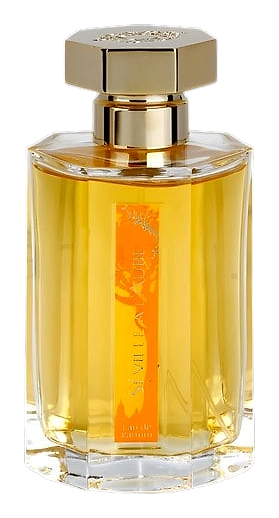
Bertrand Duchaufour created Séville à l'Aube in 2012 based on a memory from Denyse Beaulieu's book "The Perfume Lover." The scene: a Holy Week night in Seville, standing under a bitter orange tree in full bloom, watching the Madrugada processions thread through the old Moorish streets. Gilded floats bearing Christ and the Virgin. Thick crowds. Lavender cologne rising from pressed bodies. Clouds of incense cutting through the fatty honeyed smell of beeswax candles. Duchaufour translated that moment, the silver light before dawn, the smoke, the orange blossom, into a fragrance that captures the city's longest night.
What makes this composition unusual is the combination of orange blossom with beeswax and frankincense, a triad that rarely appears in Western perfumery. The beeswax brings a warm, animalic honeyed quality that grounds the bright florals. The frankincense adds a spiritual, smoky dimension that echoes the censers swinging in that plaza. Petitgrain opens the fragrance with a clean, slightly bitter citrus quality derived from the bitter orange tree, while olive blossom, rarely used in perfumery, adds a delicate green floral note that bridges the opening to the heart.
The evolution
Petitgrain opens sharp and clean, like morning light through shutters. The citrus bite gives way to orange blossom and beeswax, warm, honeyed, almost edible. Lavender and tobacco thread through the heart, adding an aromatic depth that isn't immediately obvious. For the next seven hours, orange blossom dominates with light vanillic benzoin underneath. The drydown settles into benzoin and frankincense, a honeyed amber that lingers close to the skin, intimate and persistent.
Cultural impact
Séville à l'Aube gained visibility through Denyse Beaulieu's memoir "The Perfume Lover," which documented its creation. The orange blossom and beeswax combination stood apart from typical citrus interpretations, earning a place among fragrance collectors who value narrative depth. Like Passage d'Enfer, it demonstrates how L'Artisan Parfumeur uses place and memory as creative fuel.
The House
L'Artisan ParfumeurL'Artisan Parfumeur arrived in 1976 with a quietly radical idea: perfume should feel personal, not mass-produced. Founded by chemist Jean Laporte in Paris, the house became one of the first true niche fragrance houses, championing natural ingredients and artisanal craft at a time when blockbuster launches dominated the market. Its Mûre et Musc, launched in 1978, paired blackberry and musk in a way no one had attempted before, and it became a sensation. Over nearly five decades, the house has continued to create unusual fragrances with distinguished noses, never following trends but trusting instead in beautiful materials and imaginative composition.
The Creator
Bertrand DuchaufourDuchaufour is the master of smoke and shadow, of incense rendered with painterly depth rather than theatrical force. Where many perfumers treat frankincense as a single note, he builds incense as a tonal range, capable of austerity or warmth depending on what the fragrance dem…