The Story
Why it exists.
The beginning
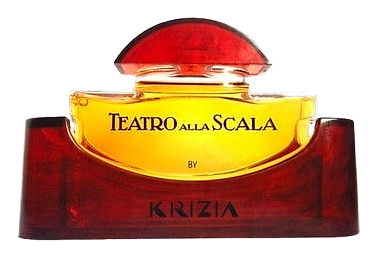
Named for Milan's famed opera house, Teatro alla Scala channels the drama and grandeur of the Italian theatrical tradition into a fragrance that performs on skin. Launched in 1985 by Krizia, the Italian fashion house founded by Mariuccia Mandelli in Milan, this was an era when Italian fashion brands treated fragrance as an extension of runway ambition, bold, confident, unapologetically present. The composition leans into the aldehydic chypre structure that defined the decade's most memorable releases, but Krizia's interpretation adds a distinctive warmth through beeswax, an unexpected material that gives the scent its signature golden quality. The name alone promises spectacle; the juice delivers.
What makes Teatro alla Scala unusual is the beeswax note threading through the heart, a material more common in natural perfumery than in commercial fragrance of this era. It acts as a binding agent, pulling the rose, carnation, and ylang-ylang into a single warm accord rather than letting them bloom separately. The aldehydic opening sets a sparkling stage, but the beeswax is what the wearer actually remembers three hours in. Combined with a civet base and the warm spice of carnation, it creates a composition that feels at once classic and singular, a 1985 chypre that doesn't sound like anything else from that year.
The evolution
The aldehydes hit first, bright, sparkling, slightly powdery in the way that reads as immediately luxurious. Bergamot cuts through the aldehydic lift, giving the opening a citrus sharpness that prevents it from going flat. Fruity notes add a whisper of sweetness. This is the curtain rising. Within fifteen minutes, the beeswax arrives. It doesn't burst in, it settles, pooling under the florals and warming everything it touches. Carnation brings its spicy edge, rose and ylang-ylang lean into the beeswax embrace, tuberose and jasmine deepen the heart. The drydown is where Teatro alla Scala earns its reputation. Civet, incense, benzoin, the animalic richness comes forward and refuses to leave. Oakmoss and patchouli anchor everything into a drydown that stays close to the skin for hours. The morning after, there is still something there: warm, animalic, quietly confident.
Cultural impact
Teatro alla Scala arrived in 1985 alongside a wave of aldehydic chypres that defined the decade's luxury fragrance vocabulary. Its beeswax note set it apart from contemporaries, a material more associated with natural perfumery than commercial launches, giving the composition an unusual warmth that has kept it in conversation decades later. Wearers who discover it often describe it as a find, something discovered rather than prescribed.