
The Story
Why it exists.
The beginning
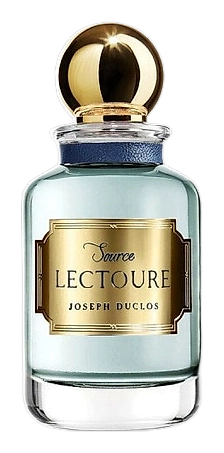
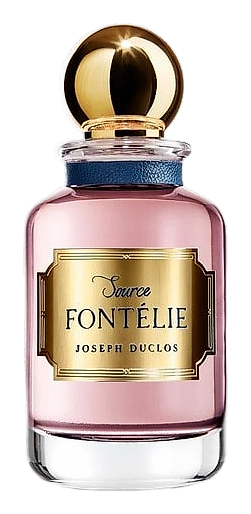
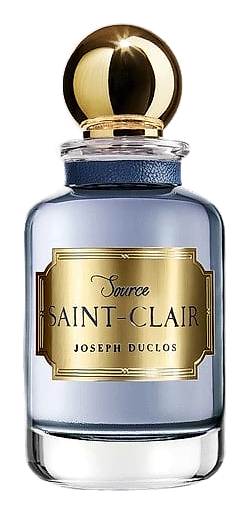
Source Saint-Clair came together in 2021 under the hand of Nathalie Feisthauer, working within Joseph Duclos's fragrance line. The name itself carries a certain specificity, the kind of place-rooted label that suggests a single location rather than a marketing construct. The composition reads as a confident evening fragrance, built on amber, spice, and a dense floral heart that settles into the skin rather than floating off it. Feisthauer shaped it around a sharp opening contrast: bright Calabrian bergamot held against something much heavier underneath, with timut pepper functioning as the hinge between the two registers. The citrus lifts off quickly, replaced within minutes by a resinous warmth that grows smoother as the hours pass.
What makes the composition unusual is its willingness to let two heavy resins carry the foundation without sinking into gloom. Siam benzoin and myrrh are listed alongside tonka and vanilla absolute, which sounds like it should read as a straight-up gourmand, but the cedarwood and Indonesian patchouli leaf keep the spine upright. Heliotrope adds a marzipan softness, and timut pepper, a relatively modern material, gives the heart a citrus-tinted buzz instead of the burnt-sugar heat you'd expect from a traditional oriental.
The evolution
The first twenty minutes are a bit of a trick. Bergamot and jasmine announce themselves first, and there's a window where Saint-Clair smells brighter and more floral than you'd expect from a composition with this much amber underneath. Then timut pepper arrives, a tingling citrus-spice that pushes the florals aside and opens the gate for clove. The clove patch is short and sharp; it hands off to heliotrope and cedarwood within thirty minutes, and now you're in the spicy-powdery register the drydown was always heading toward. This is where the composition declares what it actually is. Benzoin, myrrh, opoponax, and tonka bean absolute layer over one another into something almost candlelit. Vanilla absolute sits underneath without going sugary. Ambroxan adds a mineral clean to the base that keeps the whole thing from collapsing into pure sweetness. On skin the longevity holds through the better part of an evening before it goes quiet, and what's left on a sweater the next day is a warm, balsamic shadow.
Cultural impact
Saint-Clair sits at the heart of the Joseph Duclos line, and the fragrance itself leans into a confident, almost maximalist aesthetic by pairing Comorian ylang-ylang with Timut pepper from Nepal. The ylang brings that dense, banana-skin floral richness, while the pepper adds a bright, almost citric buzz that cuts through the sweetness before it can turn syrupy. The combination gives the heart a tension that keeps the whole composition from ever settling into comfortable territory. On skin, the ylang stays creamy and slightly indolic without becoming animalic, and the timut buzz threads through it like a current of cold air in a warm room.
The House
Joseph DuclosJoseph Duclos is a French house that bridges eighteenth‑century leathercraft with contemporary fragrance. The brand re‑emerged in 2020 under financier Franck Dahan, reviving a family name that once supplied the royal court with tannery goods. Today it offers a concise line of scented oils and a curated collection of leather accessories, each rooted in the same commitment to material honesty and quiet elegance.
The Creator
Nathalie FeisthauerIn the studio Feisthauer favors a linear approach: she isolates a core accord, then builds outward with complementary facets. She often begins with a mineral or green element, adding depth through woods, resins, or subtle spices.