
The Story
Why it exists.
The beginning
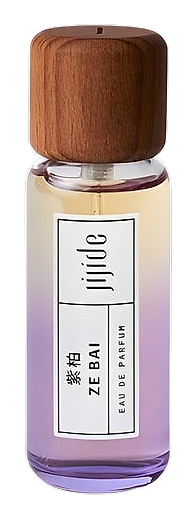
Maurizio Cerizza designed ZE BAI as part of Jijide's Collezione Personalità, released in 2021. The name carries the weight of its two ideograms: violet, an imperial color, and juniper, a tree that bends but doesn't break, symbol of inner strength. Cerizza translated this duality into a fragrance that opens bright and sweet, then settles into something more contemplative. The collezione positions each scent around a personality type, and ZE BAI was built for the introspective, someone who finds depth in stillness, who reads a room before speaking.
What makes this composition interesting is the way Cerizza handles the yellow floral family. Peach blossom and mirabelle plum give the opening a fruit-bowl immediacy, but the cyclamen and ylang-ylang in the heart prevent it from becoming sugary. Bulgarian rose adds a specific warmth, not the sharp rose of summer, but something rounder, almost powdery. The spices in the heart are warm without being spicy; they create texture rather than heat. Then the base resolves into benzoin and rosewood, two materials that reward proximity, you smell them when someone leans in, not when they enter the room.
The evolution
The opening hits fast: plum and peach arrive together, the lemon zest providing a brief citrus thread that keeps the sweetness honest. Within twenty minutes, the cyclamen and ylang-ylang take over, pushing the composition into a warm, powdery register that reads as floral first and fruity second. The Bulgarian rose doesn't announce itself, it deepens the warmth rather than dominating it. The drydown is where the benzoin and rosewood earn their place. They don't arrive all at once; they creep in over the last hour, adding a resinous sweetness that extends the wear by several hours on most skin types. The oakmoss and cedar keep everything grounded, preventing the composition from floating away entirely.
Cultural impact
Jijide's Collezione Personalità, launched in 2021, marked a departure from traditional fragrance marketing by framing each scent around a personality archetype. Rather than selling notes or emotions, the collection assigns a character type to each composition, and wearers are meant to find their match. ZE BAI targets the introspective spirit, someone drawn to depth over declaration, quiet confidence over performative presence. This approach reflects a broader shift in niche perfumery toward identity-driven consumption, where fragrance becomes a marker of self-concept rather than purely aesthetic choice.