The Story
Why it exists.
The beginning
Thuraja arrived in 2018 from Jacques Battini, sitting within the house's Orient line. The name carries an Arabic register, evoking the distant warmth of Eastern perfumery without anchoring itself to a single place. Thuraja is the soft-spoken one of the lineup, a composition that prefers a gentler approach over louder statements, something easier to live with, more like morning than midnight. The bottle itself reads as quietly considered, a piece that invites you in rather than shouting for attention. There's a sun-warmed quality to the scent's overall architecture, a creamy wood sweetness that feels grounded rather than heavy. What sets it apart in the lineup is its willingness to hold back, to let each note breathe without crowding the others.
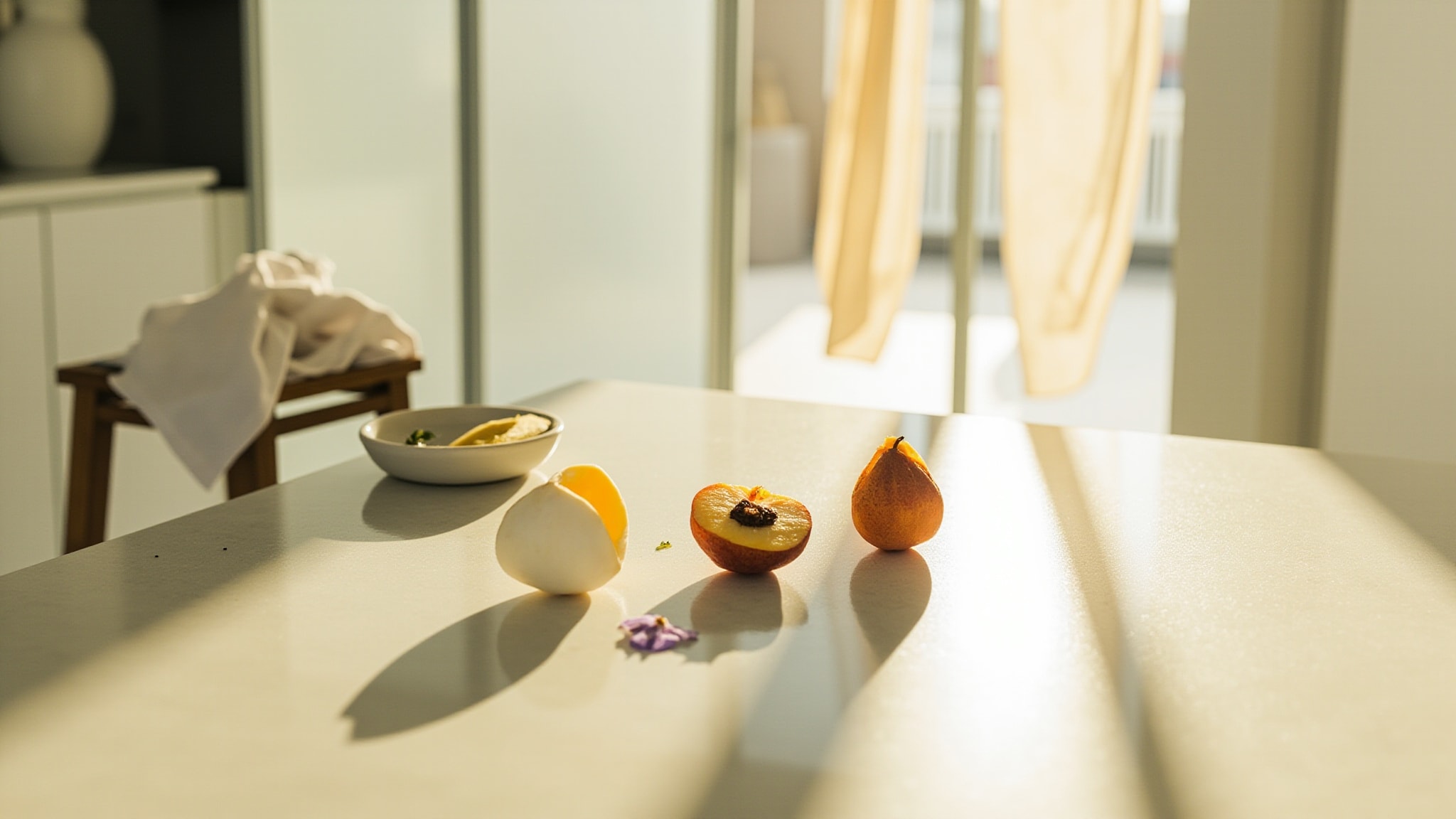
What makes Thuraja unusual is its restraint. White peach gives it a fleshy, almost edible sweetness at the top, the kind of fruity roundness that feels sun-touched rather than syrupy. Jasmine and water lily deliver the florals with a wet, green-edged clarity, each petal carrying its own weight of moisture and freshness. Violet leaf adds the herbal cool that keeps the whole thing from sliding into sweetness overload, a green note that grounds the airier elements above it.
The evolution
The opening is sharp and immediate. Bergamot and orange hit first, citrus-bright and almost sharp enough to taste, before white peach softens the blow within the first five minutes. By the fifteen-minute mark, the citrus has pulled back and the floral heart starts to take over. Jasmine arrives with a green stem note attached, water lily adds that cool aquatic shimmer, and violet leaf gives the whole thing a faintly herbal edge, like crushed leaves on a warm stone. It's the cleanest, most translucent phase of the wear, where every note seems to float just above the skin rather than press into it. The base arrives slowly, over the second and third hours, and it's where the oriental claim actually lives. Sandalwood shows up creamy and grounded, vanilla adds a quiet sweetness that never crosses into gourmand territory, and the whole composition settles into a warm, skin-close drydown.
Cultural impact
Thuraja draws on Eastern-inspired perfumery traditions, with a name rooted in an Arabic register that evokes warmth without fixing itself to any single place. The composition itself leans on classic oriental signposts like sandalwood and vanilla, but handles them with a lighter hand than many in the broader category. The result reads as approachable rather than dense, a fragrance that offers the comfort of familiar materials without the weight that sometimes accompanies them. It appeals to anyone drawn to the warmth of oriental perfumery but looking for something that wears close to the skin and moves through the day with quiet grace.