
The Story
Why it exists.
The beginning
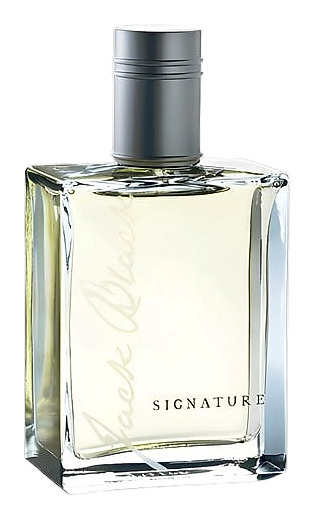
Jack Black Signature arrived in 2001 as the debut fragrance from a men's grooming brand built around practical, no-nonsense essentials. The brief wasn't fragrance-house tradition, it was men who wanted to smell good without a ceremony. Perfumer Yann Vasnier translated that sensibility into a scent that opens like morning and behaves like it means it, a fragrance that worked as hard as the man wearing it.
What makes the structure unusual is how the eucalyptus interacts with the lavender and geranium at the heart. Eucalyptus is more commonly found in men's skincare than in fine fragrance, carrying that sharp, clean quality that borders on the medicinal. Here, Vasnier didn't hide it. He leaned into it, letting that cool edge assert itself against the warmer botanical notes. The contrast between that sharp lift and the warm spice underneath, cardamom and black pepper, is what gives the fragrance its specific character. It's not fresh in the soapy sense.
The evolution
The citrus opening hits immediately: bergamot and mandarin orange, bright and uncomplicated. Mandarin fades fast, twenty minutes and it's gone. What replaces it is the surprise. Eucalyptus arrives with a clean-but-sharp note that can catch a first-time wearer off guard. It carries that sharp, just-showered quality before the lavender and geranium soften the edges. The hand-off happens around the thirty-minute mark: the eucalyptus cools back, the black pepper and cardamom warmth moves forward. By hour two, the composition has shifted entirely. No more citrus. No more sharp green. What remains is the cedar, papyrus, and patchouli, dry wood, a hint of paper, something earthier underneath. The amber keeps everything warm without sweetness. On fabric especially, there's a faint cedar-and-papyrus residue. Clean wood. The memory of the person who wore it.
Cultural impact
Jack Black Signature occupies an interesting position in early-2000s masculine fragrance. The eucalyptus note was distinctive for the mainstream men's market, more associated with skincare than perfumery. It offered something with character for men who weren't looking for barbershop classics or the sport-fragrance trend. Wearers who found it tended to keep wearing it. That polarizing element, the eucalyptus that some read as clinical, is what made it specific rather than generic.