The Story
Why it exists.
The beginning
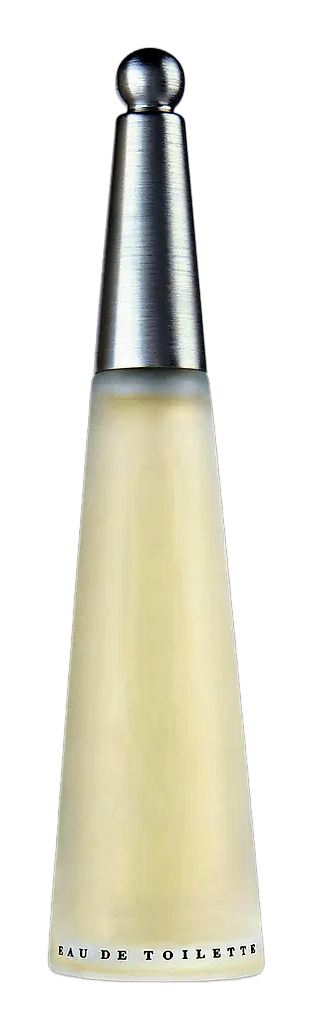
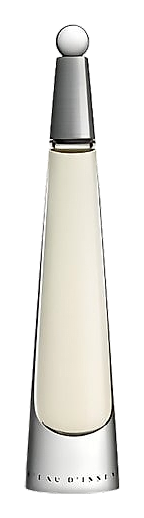
In 1992, Issey Miyake asked Jacques Cavallier-Belletrud for something radical: a fragrance built from a single idea. Water. Not a fragrance that used water notes as an afterthought, but one where water was the material itself. The brief was minimal and conceptual, and the result became the house's first fragrance, launched that same year under a licensing agreement with Shiseido. The name carries a double meaning: Issey's water, and a French homonym to Odyssée, suggesting movement and transformation. Miyake watched a full moon rise above the Eiffel Tower during a Paris stay and imagined the bottle, a cone of clear glass tapering to a wider base, with a crystalline orb at the neck that catches light differently at different times of day. The design was deliberate geometry, undecorated, emerging from that single image of light on water.
What makes L'Eau d'Issey Parfum structurally interesting is how it handles aquatic without reaching for sea salt or ozone. The lotus is the key, a flower that grows in water yet carries a soft, almost creamy floral scent entirely unlike the sharp synthetic aquatics that flooded the market afterward. Melon adds an unusual watery sweetness most aquatic fragrances skip, and the rose water appears twice in the pyramid, bridging top and heart to create a continuous watery rose thread that ties the whole composition together. At the base, cedar and sandalwood provide real substance beneath the water notes, and osmanthus adds a softly sweet, almost fruity edge that rounds the composition without weighing it down.
The evolution
The opening arrives clean and immediate. Lotus and freesia over watery melon, the melon lending a faint sweetness beneath the florals that keeps the top from reading as sharp or mineral. Freesia carries the first hour alone, then cyclamen enters as a quieter counterpoint, keeping the aquatic florals from climbing too high. The transition to heart is gradual, lily of the valley and peony arrive without announcement, softening the composition into something rounder and creamier while the melon fades. Rose water persists through the middle, threading the watery rose character from start to finish. The drydown is where cedar and sandalwood assert themselves, giving the fragrance real structure after all that transparency. Osmanthus and tuberose add a warm, sweet floral depth as the rose water finally recedes, and the musk keeps it skin-close rather than projecting. Ten hours in, what remains is a quiet woody warmth that hugs rather than announces. The sillage is strong in the first few hours, then settles into something intimate and close for the remainder.
Cultural impact
L'Eau d'Issey launched in 1992 as the house's first fragrance, translating Miyake's reductionist fashion philosophy into scent. It offered a counterpoint to the richness of the 1980s, a radical minimalism that proved the decade didn't need heavy Orientals to be compelling. An international best-seller followed, winning a Fragrance Foundation FiFi award in 1993. The men's version arrived two years later. The original fragrance became a reference point for anyone who wanted presence without projection, and the parfum concentration gives it a depth the original EDT only hinted at.