
The Story
Why it exists.
The beginning
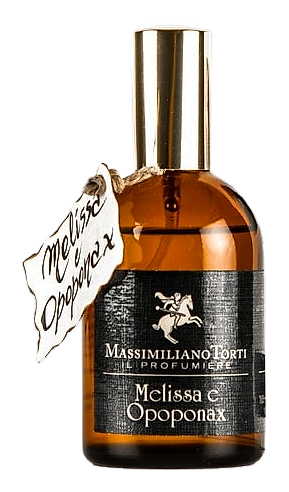
Melissa e Opoponax arrived in 2014 from Massimiliano Torti, building its character around a striking sweet-gourmand meeting point. Orange and bergamot bring a clean, sparkling start, while praline-like vanilla introduces warmth before the composition turns toward the deeper pull of myrrh and opoponax. The name joins Melissa, associated with lemon balm and herbal freshness, with opoponax, a resinous note prized for its warm, balsamic depth. There’s no documented place or personal story behind the release, but the composition itself suggests the intent clearly: a fragrance that can move from citrus brightness into sweet spice and woody resin without losing its composure.
What makes this structure interesting is its hot-and-cold balance. Citrus keeps the opening lucid, while vanilla praline gives the sweetness a rounded, almost edible warmth. Then myrrh and opoponax change the temperature. The result isn’t simple vanilla with citrus added; it’s a series of contrasts held together by woods, amber, and musk, with each material softening and deepening the one before it.
The evolution
Orange and bergamot cut through the air with citrus brightness, while vanilla praline adds a creamy warmth underneath, almost as though sunlit citrus has been pressed into a polished wooden surface. As the opening softens, myrrh and opoponax become more present. The sweetness remains, but it gains resinous depth and a faintly medicinal edge, moving from confection toward a drier, incense-like impression. In the drydown, amber, cedarwood, sandalwood, guaiac wood, and musk settle into a woody base. Vanilla remains the clearest thread, but it no longer reads as dessert alone; it becomes rounded, warm, and quietly skin-like. Over time, the composition grows drier and more polished, while the woods keep the remaining sweetness anchored.
Cultural impact
Melissa e Opoponax brings bright citrus and sweet-gourmand warmth into conversation with resinous woods, creating a composition defined by contrast and changing texture. Orange and bergamot establish a luminous opening, while vanilla praline adds a creamy sweetness. Myrrh and opoponax deepen the center with resinous, slightly medicinal notes, and amber, cedarwood, sandalwood, guaiac wood, and musk give the fragrance a warm, woody close. Its layered development invites discovery, revealing different balances of brightness, sweetness, resin, and wood as it wears.
The House
Il ProfumiereIl Profumiere is an Italian niche perfume house that blends Florentine tradition with contemporary olfactory storytelling. The brand offers a curated catalogue of scents—such as Passiflora Rouge (2000) and Dubai Sahara (2008)—that aim to evoke specific places, memories, and moods. Each fragrance is presented as a compact, artful bottle, inviting collectors to explore a sensory map of Italy and beyond.
The Creator
Massimiliano TortiTorti’s signature technique, which he calls “olfactory stratification,” layers base, heart, and top accords in a way that invites the wearer to rearrange the perfume throughout the day. He favors natural absolutes, rare botanicals, and vintage extracts, often pairing Tuscan la…