
The Story
Why it exists.
The beginning
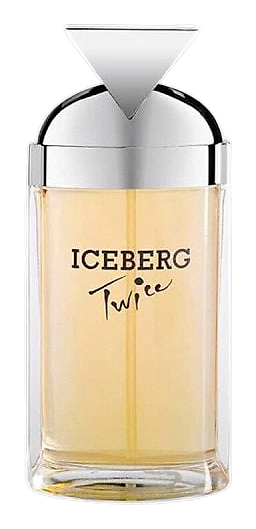
Twice arrived in 1995, designed by perfumer Ilias Ermenidis for Iceberg, the Italian fashion house known for sportswear with attitude. Ermenidis opened with aldehydes, creating that sparkling, almost effervescent quality that lifts citrus and florals into something airier than they have any right to be. Bergamot and freesia followed, keeping the top bright and clean, before the heart opened into seven florals at once: jasmine, gardenia, rose, violet, orchid, cyclamen, and orris root, a lush garden that could have gone wrong but lands confident instead. Honey anchors the base, giving all that bloom somewhere warm and grounded to settle. The result is a scent that moves with ease, confident in its construction and unafraid to layer complexity upon complexity.
The note pyramid here is a product of its decade. Six heart notes was not unusual in nineties women's fragrance, the idea was fullness, abundance, a garden in full bloom. What keeps Twice from feeling overstuffed is the aldehydes at the opening and the honey at the base. Aldehydes act as a kind of structural lift, creating space between the florals so they breathe rather than crowd. Honey does the opposite work at the end: it glues the florals together into something cohesive and warm rather than letting them scatter into soapy territory. Cedar and sandalwood in the base add just enough wood to prevent the whole composition from going entirely soft.
The evolution
The aldehydes hit first, sharp, sparkling, almost fizzy, lifting the bergamot and peach into an opening that feels cold and clean. Within ten minutes the florals begin their takeover. Gardenia arrives first, creamy and immediate, followed by jasmine and rose arriving together in a dense, warm heart that feels like standing in a florist's cooler with the door held open. The aldehydes don't disappear, they fade gradually, adding a synthetic-fresh undertone that keeps the florals from going fully natural. By the third hour the honey emerges, and with it the sandalwood and cedar begin to assert themselves. This is where the fragrance changes character most dramatically: from cool and fresh to warm and intimate. The drydown stays close to the skin, this is not a projection fragrance, but it lingers. On fabric, the honey-sandalwood combination can be detected the next morning, soft and quiet, like a trace rather than a statement.
Cultural impact
Twice sits in the crowded middle of nineties women's fragrance, an era when aquatics, sheers, and florals dominated. Its main accords, fresh and floral with woody undertones, place it in familiar territory alongside many contemporaries. What sets Twice apart is that honey-warm drydown: it earns the fragrance a complexity that many of its peers simply skip. The construction feels unusually honest, nothing hidden, nothing overstated, everything in its right place.