The Story
Why it exists.
The beginning
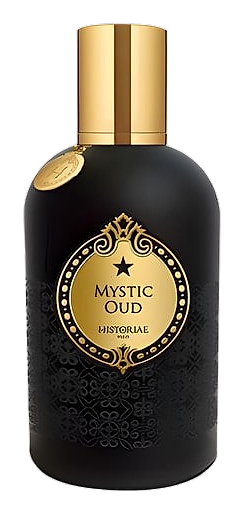
Mystic Oud is Historiae's entry into Oriental territory, launched in 2013 with perfumer Bertrand Duchaufour at the helm. The brand's catalog had already mapped French court history in careful detail, royal gardens, palace bouquets, the perfume of Versailles. With this fragrance, the story shifted east. The official narrative references an emissary who brought agarwood to France at the end of the Grand Siecle, a wood more prized than gold, strange and mystic. Duchaufour's task was to translate that encounter into something wearable: an 18th-century French sensibility filtered through an ingredient that challenged it.
What makes Mystic Oud structurally interesting is the aldehyde top. Aldehydes belong to a certain tradition of high perfumery, the cold shimmer of Chanel No.5, the metallic brightness of Serge Lutens. Here, they open a composition built around oud, which is warm, resinous, almost tar-like. The tension between these two poles, the aldehydic lift and the oud's darkness, is where the fragrance lives. Rose appears twice, which is unusual but earned: once fresh in the top, once deepened by the oud in the heart. Saffron and cloves add spice, while castoreum grounds everything in something animal and intimate.
The evolution
Thirty minutes in, the aldehydes haven't disappeared, they've softened. The citrus retreats and the rose takes over, but it's a different rose now. Drier. Less pristine. The oud has crept in beneath it, adding a resinous weight that wasn't there at opening. Saffron and geranium arrive next, adding a warm spice that feels almost savory. By the second hour, the heart is fully established: rose and oud woven together, neither dominating. The drydown takes its time. Sandalwood and benzoin create a creamy warmth, but the castoreum keeps things grounded, close, animal, intimate. On skin, this holds for 8-10 hours. On fabric, longer. The next morning: a faint warmth of vanilla and vetiver, like skin that's been close to skin.
Cultural impact
Mystic Oud arrived at a moment when Oriental fragrances were becoming more widely available, but fewer were grounded in the kind of historical specificity Historiae demands. The brand's approach, treating each fragrance as a documented artifact, not just a mood, attracted collectors who wanted the intellectual framework alongside the scent. Duchaufour's structural clarity, evident in his other work, keeps this from becoming a heavy or one-dimensional oud. It's one of the more considered Oriental releases from a niche house that typically leans toward French court history.