The Story
Why it exists.
The beginning
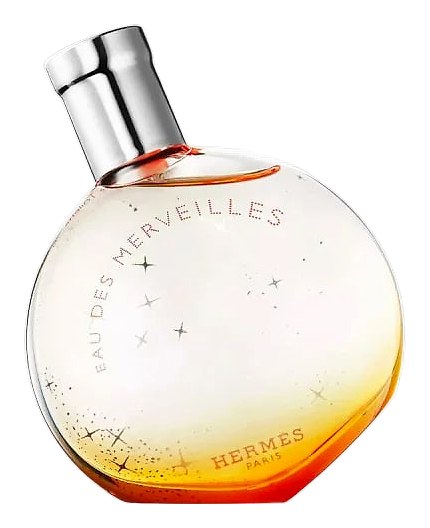
Eau des Merveilles arrived in 2004 from perfumers Ralf Schwieger and Nathalie Feisthauer, a collaboration that brought together two distinct creative sensibilities. The result was a fragrance that belongs to the Merveilles collection, a family of fragrances that explore the same amber-woody territory from different angles. From the first spray, the composition reveals its intention to work differently than expected. The amber chord doesn't behave as amber typically does in perfumery, waiting patiently in the base for its moment. Instead, it reaches upward, coloring the opening with a luminous quality that most fragrances reserve for their drydown. This structural choice gives the fragrance an immediate warmth that feels earned rather than announced.
What makes this composition structurally unusual is the amber chord running through it. Instead of waiting in the base, amber reaches up to influence the top notes, creating a luminous quality from the first spray that most fragrances reserve for their drydown. The heart is technically violet, but it reads in unexpected ways, offering something that challenges straightforward categorization. Pepper arrives in two registers, creating a duality that offers both brightness and depth simultaneously.
The evolution
The opening is citrus and elemi together: bitter orange, lemon, and that resinous green-bright note that keeps the whole thing from reading as bright. Within the first hour, violet and pepper emerge, the pepper particularly surprising in its warmth rather than sharpness. Black and pink pepper together create a duality that feels almost crystalline. By the second to fourth hours, the base takes over. Cedar appears first, then fir with its slightly camphorated character. Vetiver grounds everything with its earthy, almost root-like quality. Benzoin provides the finish: sticky, warm, with a vanilla-adjacent sweetness that stays close to skin rather than projecting. The oakmoss shows up here and it's doing something interesting, it's green and immediate, not nostalgic, keeping the whole composition grounded rather than abstract. The sillage stays intimate throughout.
Cultural impact
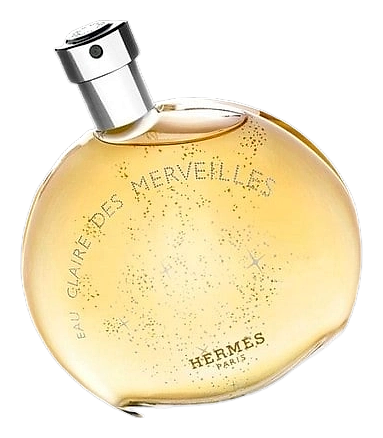
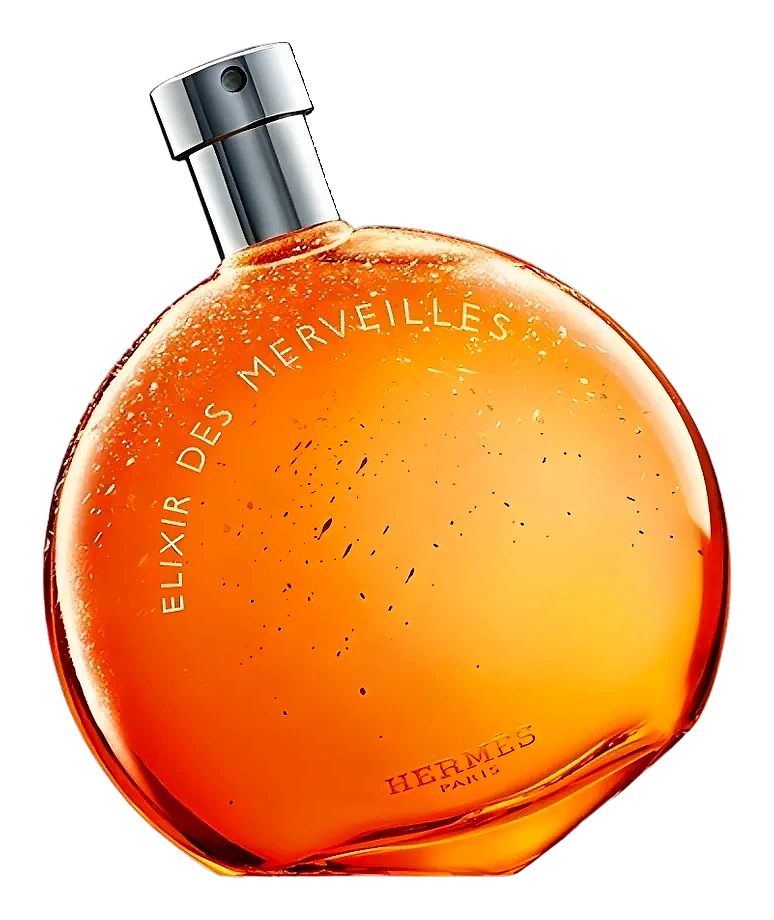
Eau des Merveilles has found its audience among those who prefer suggestion to statement. It's not a fragrance that announces itself, it rewards attention. The Merveilles line has expanded over the years, with variations including L'Ambre des Merveilles (2011), a more assertive amber interpretation, and Eau Claire des Merveilles (2016), a lighter cousin. This original stands apart for its restraint, woody, amber-forward, and deliberately quiet in its approach. The fragrance occupies a particular space in the market, appealing to those who want complexity without drama, depth without weight.