The Story
Why it exists.
The beginning
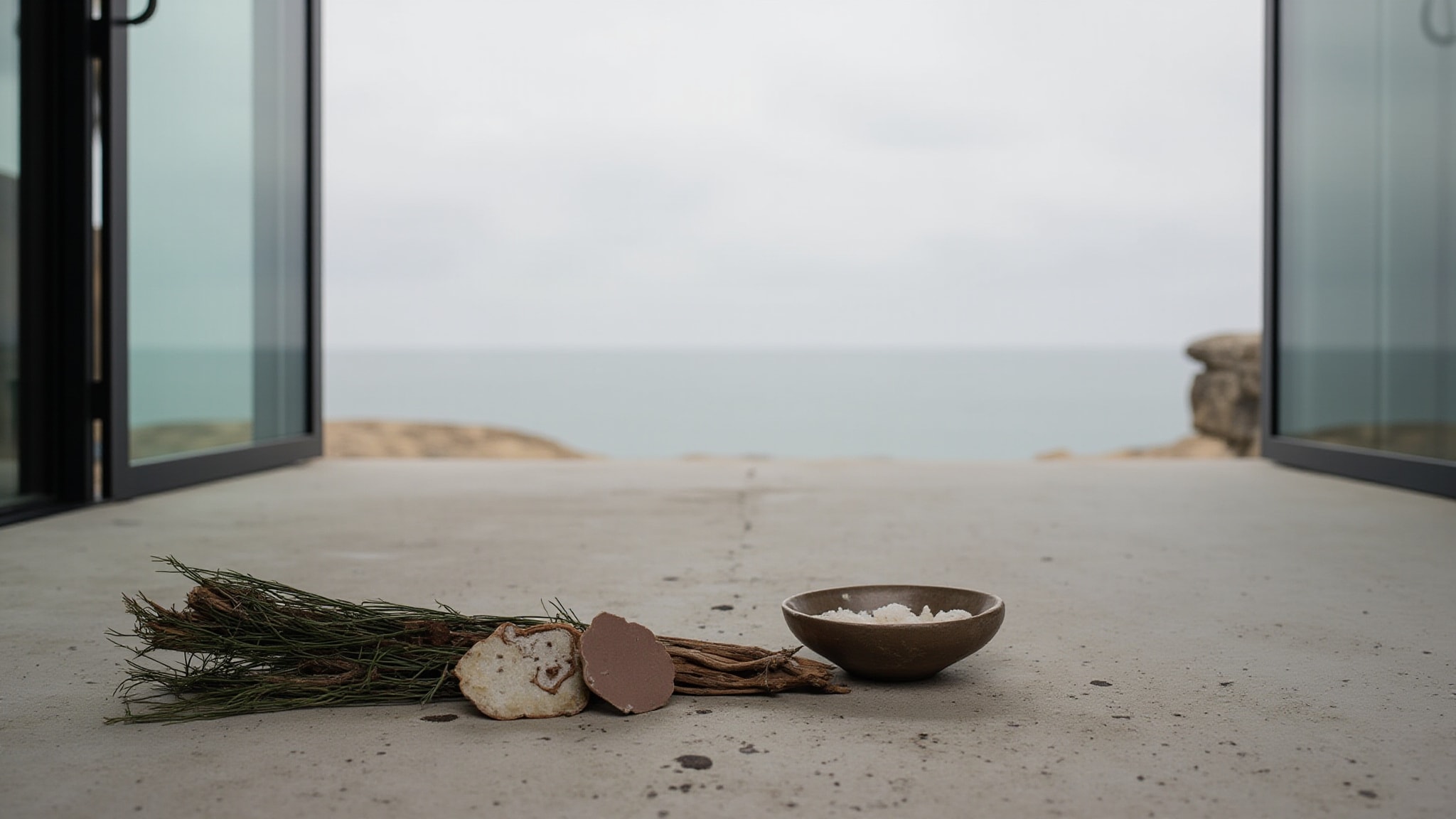
The GPS coordinates 51° 22' 17"N / 1° 22' 41"E point to a specific place: the historical St John's cemetery in Margate, on the southern stretch of Kent coastline. Dom Bridges released this composition in 2014, and the premise was straightforward: bottle the smell of somewhere real and let the numbers do the talking. No marketing prose, no invented muse. Just coordinates, coastal materials sourced from the area, and the particular atmosphere of an old English burial ground meeting the sea air that drifts inland from the cliffs. The location does the work a name usually would, stripping away abstraction and leaving the wearer standing in a literal place. There's something quietly confident about that approach, a refusal to dress the product in borrowed romance.
What separates this from a standard fougère is the unusual emphasis on green bitterness and an almost total absence of sweetness in the base. The pine needles and balsamic fir carry genuine weight, registering less as decorative evergreen accents and more as the structural backbone of the composition. Star anise sits in the heart alongside lavender and rosemary, which sounds conventional until you register how much green bitterness the petitgrain and geranium push into the mix.
The evolution
The first ten minutes are loud with citrus: Sicilian lemon and bitter orange cutting through pine resin like sunlight through cloud cover. Bergamot adds a sharper edge, almost metallic, before the conifers take over and the opening starts to feel less like a greeting and more like an environment. Around the 30-minute mark the lavender and rosemary arrive properly, joined by star anise's licorice coolness and the green bite of geranium. Petitgrain threads through like a nerve. By hour two the composition has settled into its drydown: moss and patchouli, damp and mineral, with the pine still humming underneath. The transition is gradual but deliberate, each phase folding into the next without sharp breaks, the way weather shifts along that coast. The conifers don't vanish so much as recede, becoming a base layer over which the cooler, greener notes continue to speak.
Cultural impact
This fragrance trades the usual conventions of perfumery for a set of numbers on a label, and that single choice reframes what the product is asking of the wearer. The coordinates replace any conventional naming logic, and the place, with all its specific atmospheric weight, becomes the identity of the scent. There is something appealing about that reduction: no mythology, no invented muse, no borrowed reference to explain what the liquid in the bottle is meant to evoke. Just a location, and the invitation to investigate it. The wearer encounters a composition that doesn't perform luxury or nostalgia in the usual modes.