The Story
Why it exists.
The beginning
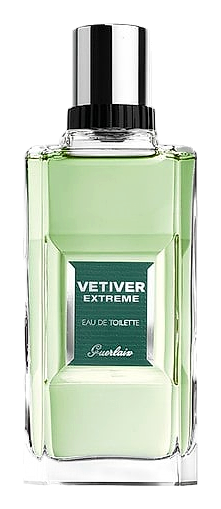
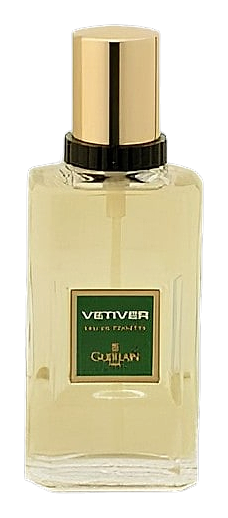
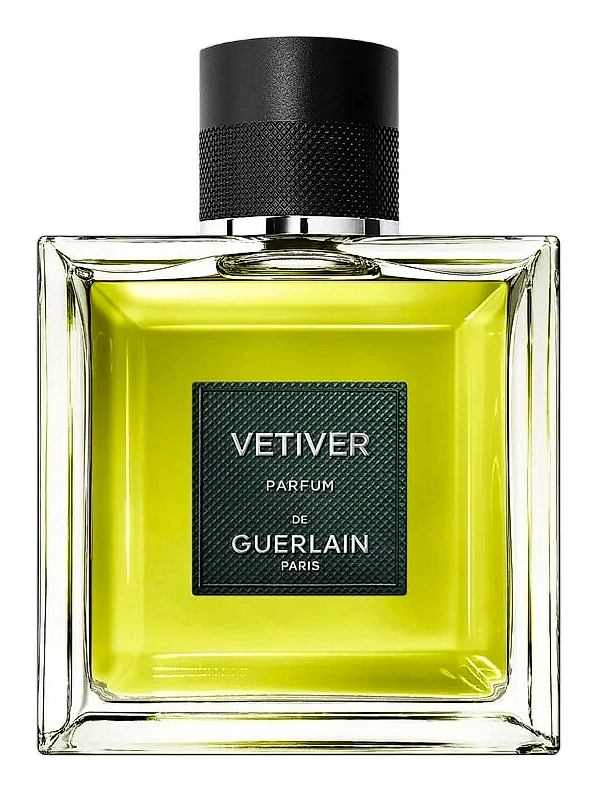
Jean-Paul Guerlain reissued the house's 1959 Vetiver in 2000, drawing inspiration from the world of spirits. Where the original was a study in green precision, the reissue became something more generous. He turned to the emblematic notes of aged spirits for their complexity and warmth, translating that rounded, refined quality into the drydown. The result kept what men had loved for four decades intact while giving the fragrance room to breathe.
The structure is built around a single material's logic: vetiver as both heart and base, holding the composition together from first spray to last hour on skin. That dual placement is unusual. Most fragrances use a note once. Here, vetiver is the skeleton. Jean-Paul Guerlain built outward from that spine, layering citrus and tobacco around it, letting the green mineral quality anchor everything that follows.
The evolution
The opening is all citrus brightness: bergamot, neroli, a flash of lemon and mandarin that reads clean and soapy. Within minutes the vetiver arrives, mineral and green, followed by black pepper and carnation adding warmth. The transition is not dramatic. It simply tightens. The heart holds for three to four hours, then begins to deepen. Leather emerges. Amber and myrrh settle close. Oakmoss adds an earthy finish that keeps the drydown grounded. By hour six, the vetiver is still there, but softer now, almost creamy against the skin. The last impression is of something worn and familiar. Not loud. Not trying.
Cultural impact
Vetiver Guerlain represents a direct lineage from the 1959 original to the 2000 reissue, embodying Guerlain's perfumery legacy across generations. When Jean-Paul Guerlain updated the original in 2000, he preserved what worked while refining the citrus and tobacco to suit contemporary tastes. This fragrance became the benchmark against which all masculine vetiver fragrances are measured. Its green, earthy character and refined woody drydown have influenced countless subsequent releases, establishing a template for masculine elegance that remains relevant. The fragrance connects wearers to a pre-digital era of perfumery when formulations were built to last and signature scents defined personal identity.
The House
GuerlainGuerlain stands as one of the oldest and most revered perfume houses in the world, founded in Paris in 1828 by Pierre-François-Pascal Guerlain. What began as a boutique on rue de Rivoli quickly became the preferred destination for Parisian society, attracting dandies and elegant women who sought custom-crafted fragrances. The house's influence grew to such heights that Guerlain earned the title of Official Perfumer to Napoleon III after presenting Eau de Cologne Impériale to Empress Eugénie as a wedding gift in 1853. This royal patronage marked the beginning of Guerlain's enduring association with European aristocracy, as the house went on to create fragrances for Queen Victoria and Queen Isabella II of Spain. Today, under the creative direction of Thierry Wasser, the fifth-generation perfumer, Guerlain continues to shape the landscape of fine fragrance with a portfolio spanning over 1,100 olfactory creations. The house remains headquartered at its legendary Champs-Élysées mansion, a historic monument that anchors Guerlain's position at the intersection of heritage and contemporary luxury.
The Creator
Jean-Paul GuerlainJean-Paul Guerlain's style resists easy categorization, though richness and depth define nearly every composition. He favored opulent oriental structures, warm woods and resins, and florals treated with almost sculptural precision.