The Story
Why it exists.
The beginning
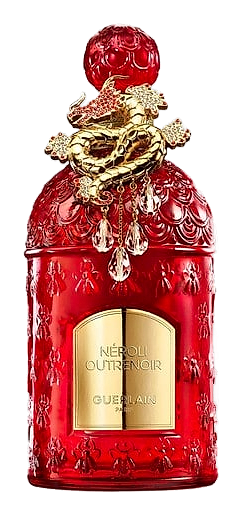
Néroli Outrenoir takes its name from two opposing forces: néroli, the intoxicating white light of orange blossom, and outrenoir, an artistic concept of endless depth and darkness. The 2024 release arrived as a limited edition celebrating the Year of the Dragon, housed in a collector's bottle designed by Parisian jeweler Francesco Truscelli, a golden dragon adorned with Swarovski crystals on Guerlain's legendary Flacon aux Abeilles. Perfumers Delphine Jelk and Thierry Wasser built this as a study in contrast: what happens when the sunlit, almost innocent opening of neroli meets a smoky, earthy heart that refuses to stay bright? The result is a fragrance that refuses easy categorization, one that starts in sunshine and ends somewhere altogether more shadowed.
The choice of tea as the heart's anchor is the telling move. Tea brings a subtle, almost medicinal quality, with an astringency that cuts through the sweetness other white floral compositions lean into. The bergamot and tangerine promise warmth and openness, but the tea-smoke duo introduces something introspective, almost private. Ambrette in the base adds a soft animal warmth that keeps the drydown from going fully dark. It's balance through opposition, not harmony.
The evolution
The opening presents a controlled burst of citrus that stays close to the skin rather than projecting aggressively. Petitgrain's bitter green edge prevents the bergamot from going full sunshine mode. Then the hand-off arrives: orange blossom and neroli appear, but they're not alone. The smoke moves in first, then the tea, bitter, warm, almost tannic. This middle phase is where the fragrance earns its name. What seemed like a sunny daytime scent reveals its complexity as the smoke and tea notes weave through the white florals, adding dimension that wasn't apparent in the first moments. The drydown develops as vanilla and benzoin create a warm amber base, with myrrh adding resinous depth and ambrette keeping the skin-warm quality from going syrupy. Moss adds an earthy, slightly dirty finish that grounds everything that came before.
Cultural impact
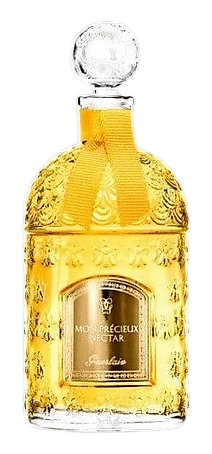
The collector's bottle, a Flacon aux Abeilles dressed in red with a golden dragon designed by Francesco Truscelli and adorned with Swarovski crystals, presents itself as a statement piece for those drawn to fragrance as art object as much as wearable scent. The dragon motif, coiled around the bottle's iconic shape, catches light and draws the eye, transforming what is already an iconic vessel into something that demands display rather than concealment. The crimson lacquer applied to the glass gives the bottle a richness that photographs cannot fully capture, a depth that changes under different lighting conditions throughout the day.
The House
GuerlainGuerlain stands as one of the oldest and most revered perfume houses in the world, founded in Paris in 1828 by Pierre-François-Pascal Guerlain. What began as a boutique on rue de Rivoli quickly became the preferred destination for Parisian society, attracting dandies and elegant women who sought custom-crafted fragrances. The house's influence grew to such heights that Guerlain earned the title of Official Perfumer to Napoleon III after presenting Eau de Cologne Impériale to Empress Eugénie as a wedding gift in 1853. This royal patronage marked the beginning of Guerlain's enduring association with European aristocracy, as the house went on to create fragrances for Queen Victoria and Queen Isabella II of Spain. Today, under the creative direction of Thierry Wasser, the fifth-generation perfumer, Guerlain continues to shape the landscape of fine fragrance with a portfolio spanning over 1,100 olfactory creations. The house remains headquartered at its legendary Champs-Élysées mansion, a historic monument that anchors Guerlain's position at the intersection of heritage and contemporary luxury.
The Creator
Delphine Jelk & Thierry WasserJelk builds compositions around contrast and tension—warm, round, and inviting, yet never soft. Her signature leans heavily on iris, musks, and powdery facets that give her work a distinctive texture, like cashmere caught in amber.