The Story
Why it exists.
The beginning
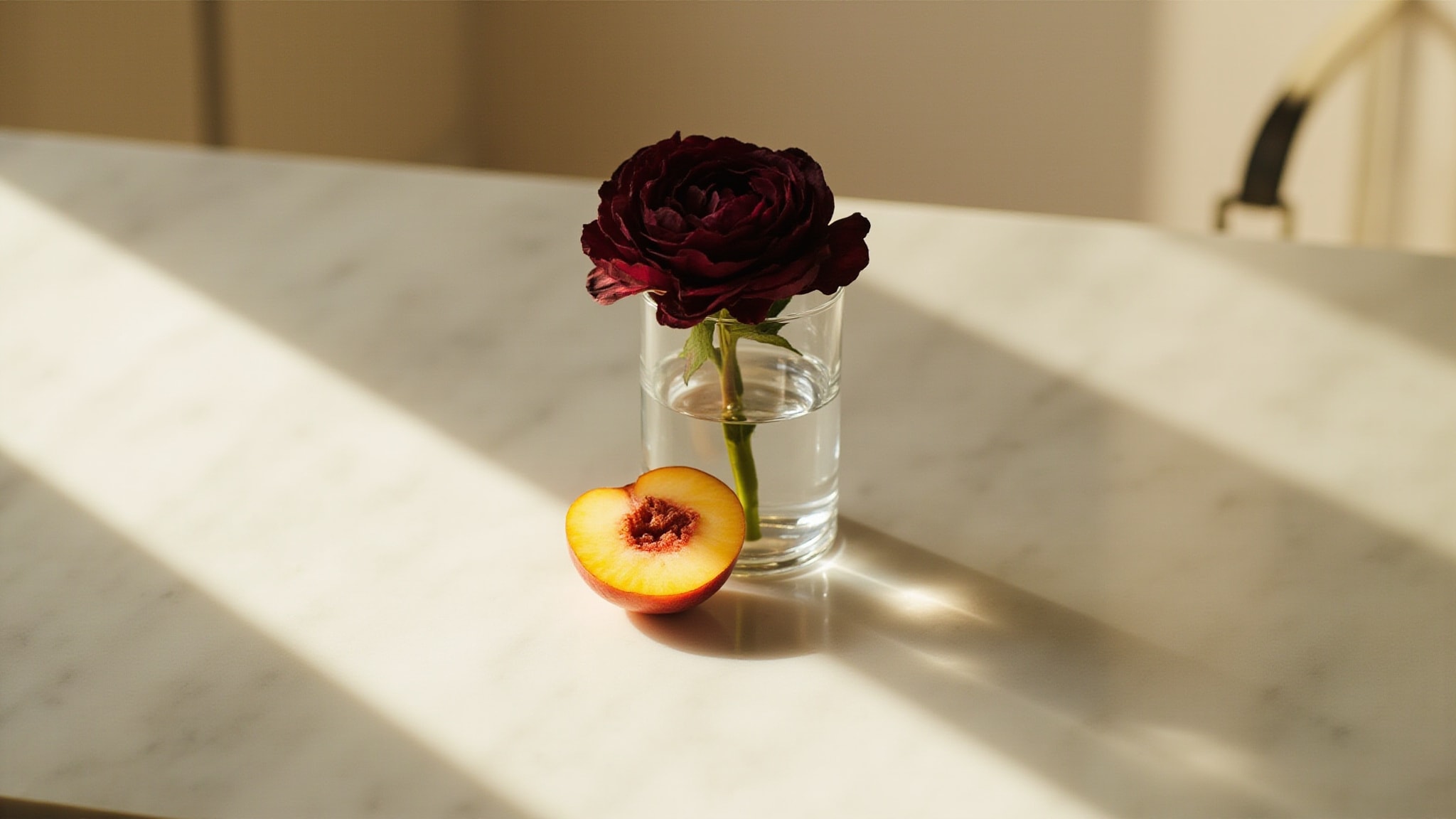
Jean-Paul Guerlain created Nahema in 1979, naming it for something that resonated beyond the note pyramid. The fragrance was built around an oriental rose, but the intrigue runs deeper than the note list suggests. Some claim there is no actual rose in the composition at all, that the rose impression is achieved entirely through aromatic chemistry, an illusion so convincing it no longer matters if it's real. The official description calls it an enigmatic elixir with a spellbinding charm that gradually transforms into a haunting presence. That word, haunting, tells you everything about the intent. This was not a safe floral.
The key to Nahema's strange beauty lies in its aldehydic structure. Aldehydes create a luminous, almost waxy quality that can make floral materials feel abstracted, more like the idea of a flower than the flower itself. Combined with rose's dark, honeyed character and the tropical warmth of passion fruit in the base, the composition achieves a rose that smells expensive and ancient and unlike any fresh garden. Ylang-ylang and hyacinth add a lush, almost tropical density to the heart, while Peru balsam gives the whole thing a resinous, slightly medicinal backbone.
The evolution
The opening hits bright and crystalline, aldehydes lifting the bergamot and peach into something electric. There's a sharpness to it, almost medicinal, the green notes and aldehydes doing battle before the rose fully arrives. Then the hand-off: rose takes over, but it's not the clean rose of spring. It's dark, dense, honeyed. Hyacinth and ylang-ylang layer beneath it, jasmine and lilac adding white floral depth that feels opulent and old-world. The aldehydes never fully disappear, they linger as a ghostly shimmer throughout the heart. By the second hour, the base begins its slow reveal: vanilla and Peru balsam warm things up, sandalwood adds cream, vetiver grounds it in something earthy and dry. Passion fruit stays as an abstract sweetness, never quite identifiable, just a tropical breath beneath the florals. The drydown is where Nahema earns its name.
Cultural impact
Nahema sits in a lineage of opulent, theatrical Guerlain fragrances, perfumes that assume the wearer has nothing to prove. It arrived in 1979, an era when the house was still capable of creating something that felt larger than fashion. The debate over whether it contains actual rose or just the illusion of one has become part of its legend. For a certain kind of wearer, someone who has earned their place and doesn't need validation, this is the fragrance. Not because it's safe, but because it's certain.