The Story
Why it exists.
The beginning
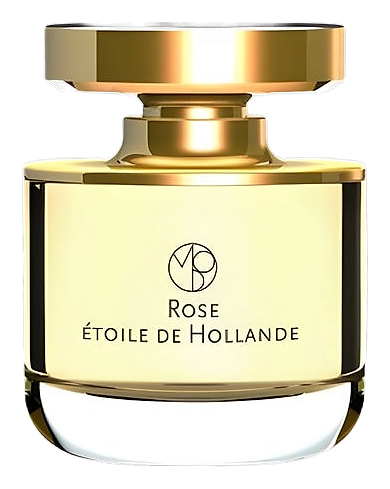
In Cabris, France, a rose climbed the walls of Maison Sainte Blanche. Mona di Orio studied that rose. She understood it as something that could be regal and joyous and sensual all at once, a flower with depth, not just prettiness. When she created Rose Etoile de Hollande in 2012, it became her tribute to her own life and work as a perfumer. She had trained under Edmond Roudnitska, drawn from Serge Lutens, approached fragrance as a composer approaches music, building scents that unfold through distinct phases rather than remaining static. This rose was her final statement in that tradition: a flower that opens bright and becomes something else entirely by the time it settles.
What makes this composition unusual is the pairing of white peach with aldehydes and clove. Aldehydes can swing florals into something almost waxy and vintage; peach keeps them lush and modern. Cloves add a warmth that borders on edible without crossing into food territory. The heliotrope in the top is doing quiet work too, powdery and slightly nutty, it bridges the bright opening into the heart where Bulgarian rose and geranium take over. Cedar and patchouli arrive next, giving the heart a woodiness that stops the rose from ever becoming one-dimensional. It's the interplay of powdery and warm, innocent and sensual, that gives this fragrance its particular tension.
The evolution
The bergamot arrives first and clears the air for about fifteen minutes. Then the aldehydes kick in, lifting the white peach into something that feels almost crystalline, bright, clean, a little vintage. The Bulgarian rose appears around the thirty-minute mark, but it's not the only voice. Geranium and clove are already there, adding herbal warmth and a subtle spice that keeps the florals from getting soft. By the second hour, the heart has fully arrived: warm cedar, earthy patchouli, a sly leather note peeking through. The heliotrope softens everything into powder. Then the base takes over. Benzoin and vanilla create a sweet, balsamic warmth that wraps around the cedar and patchouli. The rose doesn't disappear, it settles, becomes warm, becomes skin. The drydown lasts six to eight hours on most skin types, moderate sillage, projection that fades but never abandons you.
Cultural impact
Rose Etoile de Hollande occupies a particular space in the landscape of modern rose fragrances, neither the rose soliflores of classical perfumery nor the avant-garde interpretations of contemporary niche houses. It draws from the richness of early 20th-century craftsmanship while remaining legible to the modern nose. For those who seek depth over display, it offers a rose that rewards patience: bright at first, warm as it settles, intimate by the time it fades.