
The Story
Why it exists.
The beginning
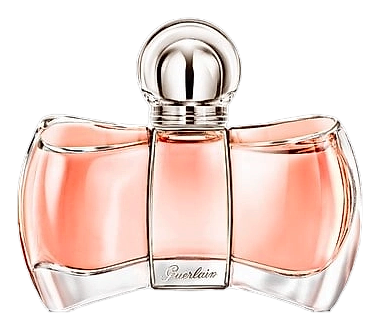
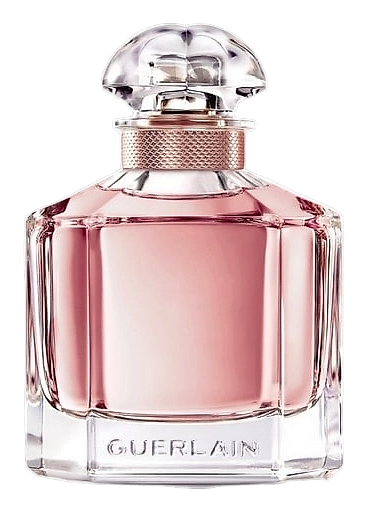
Mon Guerlain launched in 2017 as Guerlain's tribute to contemporary women, strong, free, sensual femininity, inspired by Angelina Jolie. A year later, Florale arrived as a more floral and airy version of the original. Thierry Wasser increased the jasmine sambac concentration and introduced peony as a new heart note. The rose-gold bottle replaced the champagne nuance of the original. This was deliberate, not a replacement but a sibling. For those who loved the original's structure but wanted more softness, more air, more flowers.
Peony isn't typically a Guerlain note. The house is known for jasmin, iris, rose, classic florals with structure. Peony is lighter, more diffuse, less historical. Adding it to the Mon Guerlain lineup was a quiet statement: the contemporary woman can wear something that doesn't require footnotes. The Paradisone molecule amplifies the peony sensation without literally adding petals, it creates a glow effect, as if the flowers were lit from within. Jasmine sambac stays true to its tropical origins in the heart, providing that warm, slightly indolic richness that grounds the composition. The base, iris and vanilla, is classic Guerlain.
The evolution
The opening is bergamot and mandarin, bright and clean for about twenty minutes. Then the lavender arrives, not sharp, not herbal, but cool and calm. The citrus fades, the lavender settles, and the florals begin their slow takeover. Peony and jasmine sambac take center stage for the next several hours, with the peony becoming more prominent as the jasmine settles into the skin. The base arrives gradually, sandalwood and vanilla at first, warm and creamy. Iris joins later, adding that powdery Guerlain signature. By hour six, you're left with a soft vanilla and iris blend that could easily pass for a skin scent. The sillage is moderate throughout. Close enough that someone standing next to you will notice, not loud enough to announce you from across the room. Performance holds well, eight to ten hours on most skin types.
Cultural impact
Mon Guerlain arrived in 2017 as a statement about contemporary femininity, strong, free, sensual. Florale followed a year later as a softer, more floral interpretation for those who wanted the same structure with greater air and lightness. The rose-gold bottle differentiates it visually from the original. It's Guerlain for a woman who appreciates the house's heritage but doesn't need to announce it.
The House
GuerlainGuerlain stands as one of the oldest and most revered perfume houses in the world, founded in Paris in 1828 by Pierre-François-Pascal Guerlain. What began as a boutique on rue de Rivoli quickly became the preferred destination for Parisian society, attracting dandies and elegant women who sought custom-crafted fragrances. The house's influence grew to such heights that Guerlain earned the title of Official Perfumer to Napoleon III after presenting Eau de Cologne Impériale to Empress Eugénie as a wedding gift in 1853. This royal patronage marked the beginning of Guerlain's enduring association with European aristocracy, as the house went on to create fragrances for Queen Victoria and Queen Isabella II of Spain. Today, under the creative direction of Thierry Wasser, the fifth-generation perfumer, Guerlain continues to shape the landscape of fine fragrance with a portfolio spanning over 1,100 olfactory creations. The house remains headquartered at its legendary Champs-Élysées mansion, a historic monument that anchors Guerlain's position at the intersection of heritage and contemporary luxury.
The Creator
Thierry WasserWasser gravitates toward green, crispy notes and the bold florals Guerlain is known for. Bulgarian rose appears repeatedly in his work, and he travels annually to oversee the harvest in Kazanlak.