The Story
Why it exists.
The beginning
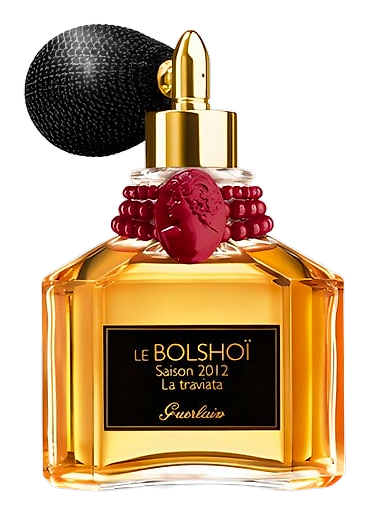
Paris, 2012. The Bolshoi Ballet stages La Traviata, and Guerlain releases a companion fragrance composed by Jean-Paul Guerlain for the occasion. Orange blossom, jasmine, and violet over a warm base of vanilla, tonka, and a thread of incense. A scent that mirrors the opera's arc, bright and open at first, then quietly devastating by the final act.
What makes this work is the way the white florals build without ever becoming heavy. Jasmine and ylang-ylang carry weight, but the violet and orange blossom lift them into something powdery and airy, that Guerlain signature that's hard to name but impossible to mistake. The incense doesn't announce itself. It lingers in the background, giving the vanilla something to lean against rather than melt into.
The evolution
The opening arrives bright and clean, neroli, bitter orange, and a hint of bergamot that reads almost like skin warmed by sunlight. Within minutes the citrus recedes and the jasmine takes the stage, backed by violet and orange blossom. This is the heart of La Traviata: powdery, floral, elegant. The drydown is where it earns its keep. Vanilla and tonka bean soften everything, white musk keeps it intimate, and the incense adds just enough smoke to make it interesting. Six to eight hours later, it's still there, close to the skin, warm, quietly present.
Cultural impact
La Traviata exists in a specific space: the intersection of classical beauty and modern wearability. It's not a safe flanker or a novelty release, it's a Guerlain composition in the classical tradition, made for a specific cultural moment. Wearers describe it as the kind of fragrance that earns compliments from people who notice, not everyone who passes by.