The Story
Why it exists.
The beginning
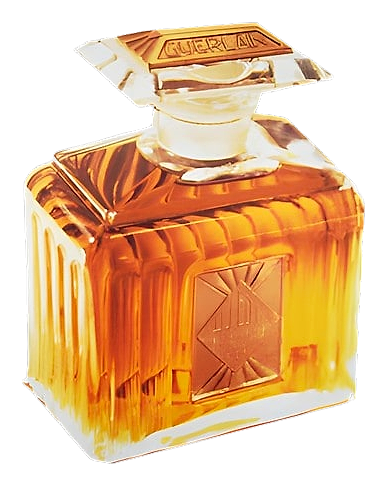
Fleur de Feu arrived in 1949, composed by Jacques Guerlain. The name, Fire Flower, suggests heat held in check, a spark contained within something delicate. The aldehydes give the opening a soapy-bright shimmer, lifting jasmine and bergamot into the air with unusual immediacy. There is a softness here too, a honeyed warmth threaded through the florals that keeps the composition from feeling sharp. It is an intimate fragrance, one that rewards close attention rather than announcing itself across a room.
The aldehydic top is the structural choice that makes everything else possible. Aldehydes don't smell like anything natural, they add lift, a soapy-bright shimmer that lifts jasmine and bergamot into the air faster than those materials could manage alone. The honey note works differently: it's a sweetness threaded through the heart that keeps the florals from going cold. By the time sandalwood and tonka bean arrive in the base, the composition has traveled from sparkle to cream, and stayed there.
The evolution
The opening is all drama: aldehydes hit hard and fast, accompanied by a brief bergamot bitterness that disappears before you've fully registered it. Within ten minutes, the florals take over, jasmine and lily of the valley at the front, with ylang-ylang adding a faint tropical creaminess underneath. The honey never disappears, but it recedes into the background, lending sweetness without sweetness. By the second hour, the composition has settled into its heart: a soft, powdery floral that smells like violets dusted with iris. The sandalwood and tonka bean arrive gradually, not announcing themselves. The base that follows is warm, clean, and intimate, you have to be close to smell it, but it remains, giving off the faint impression of powder and vanilla.
Cultural impact
Fleur de Feu occupies a distinct position within the Guerlain catalog. Its aldehydic structure and powdery florals set it apart from the house's more declarative fragrances, offering something quieter and more restrained. The fragrance appeals to those who appreciate a subtle take on the genre, finding admirers among collectors who value its delicate approach.
The House
GuerlainGuerlain stands as one of the oldest and most revered perfume houses in the world, founded in Paris in 1828 by Pierre-François-Pascal Guerlain. What began as a boutique on rue de Rivoli quickly became the preferred destination for Parisian society, attracting dandies and elegant women who sought custom-crafted fragrances. The house's influence grew to such heights that Guerlain earned the title of Official Perfumer to Napoleon III after presenting Eau de Cologne Impériale to Empress Eugénie as a wedding gift in 1853. This royal patronage marked the beginning of Guerlain's enduring association with European aristocracy, as the house went on to create fragrances for Queen Victoria and Queen Isabella II of Spain. Today, under the creative direction of Thierry Wasser, the fifth-generation perfumer, Guerlain continues to shape the landscape of fine fragrance with a portfolio spanning over 1,100 olfactory creations. The house remains headquartered at its legendary Champs-Élysées mansion, a historic monument that anchors Guerlain's position at the intersection of heritage and contemporary luxury.
The Creator
Jacques GuerlainJacques was among the first perfumers to work seriously with synthetic ingredients alongside naturals, publishing on essential oils with chemist Justin Dupont and experimenting with perfuming ink. His technical approach was precise: volume measurements for liquids, careful wei…