
The Story
Why it exists.
The beginning
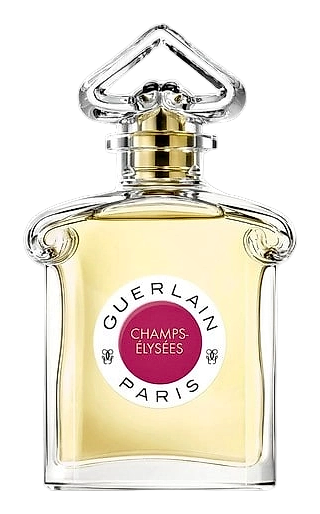
Champs Élysées takes its name from the most famous avenue in Paris, the one that starts at the Place de la Concorde and ends at the Arc de Triomphe, lined with luxury houses and the kind of light that makes everything look like it's been curated. Olivier Cresp created this fragrance in 1996 as part of Guerlain's Les Légendaires collection, building it around mimosa as the central note. The choice of mimosa is significant: in France, it signals the arrival of spring, its golden flowers appearing along the Côte d'Azur and in Grasse just as the winter light breaks. Cresp wanted to bottle that feeling, not a postcard of Paris, but the actual mood of walking that avenue when the light is right and everything seems possible.
What makes Champs Élysées unusual in the Guerlain lineup is its yellow floral character. Most houses treat yellow florals, mimosa, ylang-ylang, daffodil, as supporting players, background warmth beneath sharper notes. Here, mimosa leads. Peony, lilac, and rose petals follow, building a heart that reads as sunny and powdery simultaneously. The trick is the star anise in the opening, it adds a quiet aromatic quality that prevents the florals from becoming too sweet, keeping the composition grounded. Then the base delivers benzoin and vanilla, which add warmth without heaviness. The result is a fragrance that feels like afternoon light: present, warm, and impossible to resist.
The evolution
The opening of Champs Élysées is cool and slightly metallic, violet and star anise create an effect that reads more mineral than sweet. Blackcurrant and melon arrive quickly, adding fruit that feels more fresh than ripe. The melon is the surprise here: a watery quality that keeps the top notes from sitting too heavily. By the time the heart develops, the composition has shifted entirely. Mimosa takes over, and suddenly the fragrance is warm, powdery, honeyed. Lilac and lily of the valley add a quiet green undertone beneath the peony and rose petals. The transition is graceful, no harsh edges, no sudden drops. By the drydown, the florals have softened into a warm amber. Benzoin and sandalwood create a skin-close effect that lingers for hours. What stays longest is the almond-vanilla warmth, powdery in the best sense, the kind of scent that clings to a scarf or a collar without announcing itself. On fabric, it can last well into the next day.
Cultural impact
Champs Élysées has maintained a quiet popularity since its 1996 launch, consistently rated among Guerlain's most beloved florals. The fragrance appeals to those who want a powdery, warm floral without heaviness, a difficult balance to achieve. Community ratings consistently praise the distinctive mimosa-peony combination and the warm, skin-close drydown, with longevity rated around 8-10 hours on most skin types.
The House
GuerlainGuerlain stands as one of the oldest and most revered perfume houses in the world, founded in Paris in 1828 by Pierre-François-Pascal Guerlain. What began as a boutique on rue de Rivoli quickly became the preferred destination for Parisian society, attracting dandies and elegant women who sought custom-crafted fragrances. The house's influence grew to such heights that Guerlain earned the title of Official Perfumer to Napoleon III after presenting Eau de Cologne Impériale to Empress Eugénie as a wedding gift in 1853. This royal patronage marked the beginning of Guerlain's enduring association with European aristocracy, as the house went on to create fragrances for Queen Victoria and Queen Isabella II of Spain. Today, under the creative direction of Thierry Wasser, the fifth-generation perfumer, Guerlain continues to shape the landscape of fine fragrance with a portfolio spanning over 1,100 olfactory creations. The house remains headquartered at its legendary Champs-Élysées mansion, a historic monument that anchors Guerlain's position at the intersection of heritage and contemporary luxury.
The Creator
Olivier CrespCresp's signature style often features a blend of fresh, clean notes with warm, comforting accords. He's known for his masterful use of fruit notes, particularly fig and berries, which he often combines with florals and musks to create scents that are both inviting and sophist…