
The Story
Why it exists.
The beginning
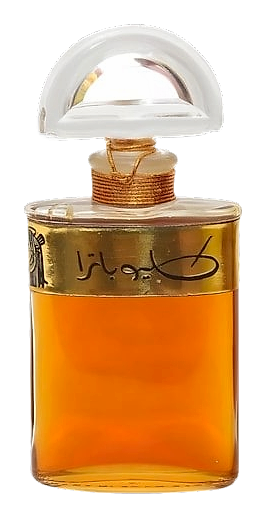
Cleopatra by Kesma arrived in 1983, the most recent datestamped title in a catalog that otherwise clusters in the early 1960s. Where Cairo carries the mood of a sultry midcentury afternoon, Cleopatra reaches further back, toward pharaonic romance, toward incense and procession. The name itself establishes the fragrance's mood and sense of time. Kesma builds fragrances the way other houses build archives. Each release carries a bracketed year, while the titles function as names for distinct olfactory experiences. Cleopatra sits at 1983, a departure from the 1960s cluster that defines the house's core. What that composition was meant to capture, beyond the name, lives in the bottle itself.
The composition is unusually dense for a floral oriental, with notes arranged across three layers. Orange blossom, ylang-ylang, heliotrope, narcissus, tuberose, jasmine, rose, and iris share the heart. Honey acts as a kind of glue, warm and almost edible, holding the white florals in tension with the spice. What sets the structure apart is the collision at the top. Cinnamon, black pepper, cloves, and galbanum open together, a combination that can read green and sweet and hot at once.
The evolution
The opening begins with a bright collision of citrus and spice. Bergamot, lemon, mandarin, and orange blossom give the composition a fresh, luminous edge, while cinnamon, black pepper, cloves, and galbanum introduce heat and a sharp green thread. The result is lively but not simple: citrus brightness sits beside aromatic dryness, and the spice gives the first impression a warm structure. Honey introduces a rounded sweetness as the floral center develops. Orange blossom brings a clean, luminous quality, while ylang-ylang, heliotrope, narcissus, tuberose, jasmine, rose, and iris create a layered bouquet with both fresh and dense moments. The florals do not erase the opening spice. Instead, honey softens the contrast between heat and sweetness, allowing the heart to feel richer and more enveloping. Later, sandalwood and patchouli provide a darker foundation.
Cultural impact
Cleopatra sits within a Kesma lineup that includes Cairo and Serenade, titles that give the collection a strong sense of place and atmosphere. Its pharaonic reference is paired with a composition built from citrus, spices, dense white florals, honey, woods, resins, and amber. The result is an exploratory fragrance profile: bright at first, floral through the middle, and grounded by darker materials in the drydown. For those interested in layered floral orientals, the name offers a clear point of entry while the note composition supplies the detail.