
The Story
Why it exists.
The beginning
Xeryus arrived in 1986 as Givenchy's masculine answer to a specific kind of man, one who wanted complexity without decoration. Alberto Morillas built it around American and Mexican grapefruit essence, a pimento accord that brought the heat, and a base that refused to apologize for itself. The name, borrowed from ancient Egyptian royalty, set the tone: this was fragrance as statement, not accessory. For a house that had already given the world L'Interdit and Gentleman, Xeryus was another act of couturier's nerve, scent as uniform, scent as identity.
What makes Xeryus structurally interesting is the pyramid's ambition. Most 1980s masculines front-loaded the citrus and let the drydown sort itself out. Here, the top notes, lavender, bergamot, green notes, and a freight of florals including jasmine and ylang-ylang, don't just disappear. They hand off to a heart of cypress, juniper, carnation, and geranium that carries the composition through its middle hours before oakmoss, leather, vetiver, and musk take over. The result is a fragrance that evolves rather than simply fades. That complexity is what keeps people coming back to it decades later.
The evolution
The opening hits fast, grapefruit and pimento give you thirty seconds of sharp brightness before the green notes arrive. Lavender and bergamot arrive with a crispness that feels almost medicinal at first, that characteristic 80s edge some people still love and others find polarizing. Within minutes, the heart takes over: cypress and juniper provide that pine-resin quality, while carnation and geranium introduce a floral sweetness that keeps things from getting too austere. The sillage peaks here, then settles into something more moderate. The drydown is where Xeryus earns its reputation. Oakmoss anchors everything, leather and vetiver come forward, and amber adds warmth underneath. Incense and musk complete the picture, close, warm, and lingering for hours. The cedar emerges late, giving the finish a clean, refined quality that most wearers describe as elegant rather than heavy.
Cultural impact
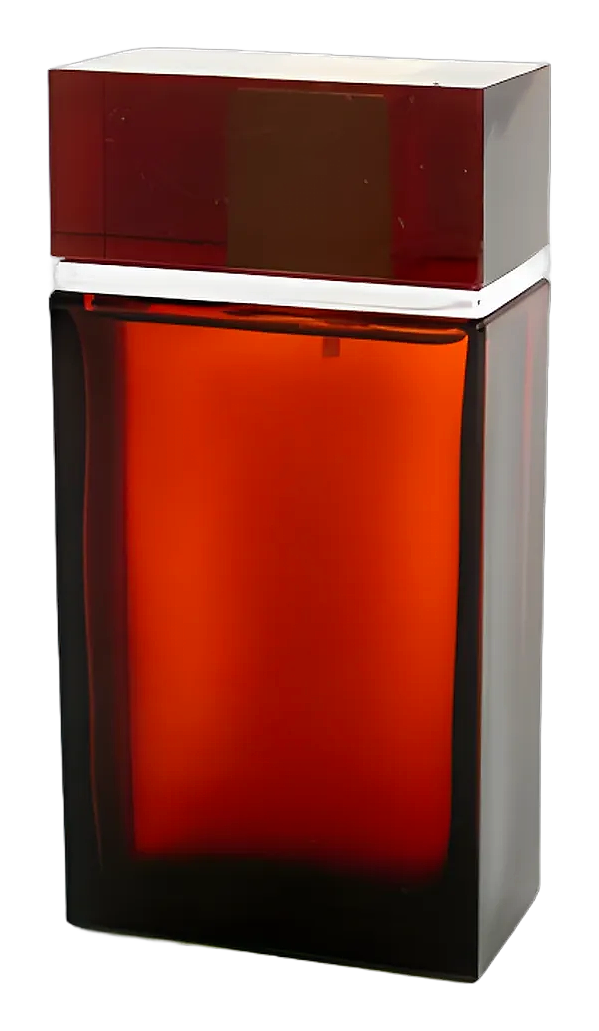
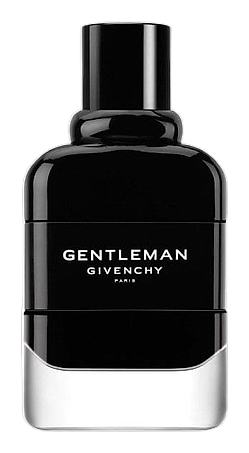
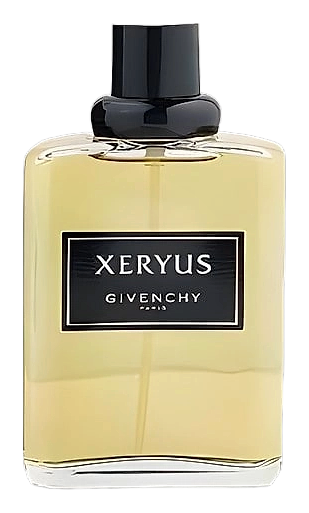
Xeryus earned its place in Givenchy's masculine collection, a house that has defined masculine elegance since 1959's Monsieur de Givenchy and 1974's Gentleman. Crafted by Alberto Morillas, who would go on to compose some of the most recognized men's fragrances of the past four decades, Xeryus captures a specific moment in masculine fragrance history: the late 1980s, when complexity and presence were not just tolerated but expected. The bottle, designed by Catherine Krunas at Atelier Dinand, reflects Givenchy's commitment to architectural form, heavy, satisfying, with minimalist labels and strong silhouettes. Some wearers note the current formulation lacks the depth of the original 1986 release, but the core character remains intact.