
The Story
Why it exists.
The beginning
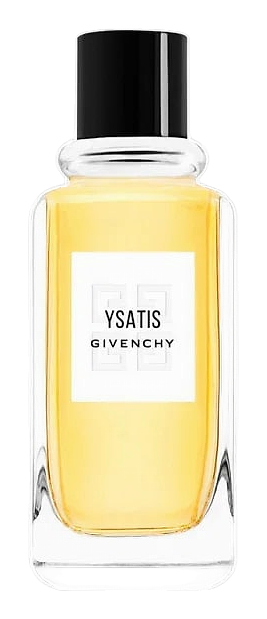
Ysatis arrived in 1984, the year Givenchy was already rewriting what a French fashion house could smell like. The house partnered with Dominique Ropion to compose something unprecedented for its women's line: a chypre that wore like a tropical fever. The name Ysatis carries an evocative, almost mythical resonance that lingers in the ear long after the bottle is back on the vanity. Ropion built the composition with an architect's instinct and a sensualist's palate, threading aldehydes and galbanum into a structure that feels both couture-sharp and emotionally untamed. The aldehydes sparkle with couture precision, each facet catching light like a faceted gem turned just so.
What makes Ysatis remarkable is how much it risks in a single composition. Aldehydes, galbanum, and neroli open with sharp, almost medicinal brightness, the kind of green-tinted sparkle that demands attention. Then coconut arrives, a note that rarely belongs in serious chypre territory, softening everything without apology. The heart layers jasmine, tuberose, ylang-ylang, and Egyptian rose with a honeyed sweetness that reads both opulent and unguarded.
The evolution
The first fifteen minutes are practically architectural. Aldehydes, galbanum, and neroli flash cold and green, almost bracing in their clarity. There's a metallic edge to the brightness that feels deliberate, a couture-like sharpness that signals the composition's classical pedigree. The coconut cuts through almost immediately, softening the aldehyde bite into something creamy and unexpected, a tropical intrusion that catches you off guard. Within thirty minutes, the white florals arrive: jasmine, tuberose, ylang-ylang, and rose building a dense, almost narcotic bouquet that fills the air around the wearer. The honey underneath doesn't announce itself, but you'll feel it, a golden warmth that keeps the florals from ever going powdery or flat. As the hours pass, the base starts its slow takeover, shifting the composition from radiant bloom to something deeper, more grounded.
Cultural impact
Ysatis found its audience quickly, and that audience has stayed loyal across decades. It wears like a signature, not a seasonal fling, and that's exactly why it has endured since 1984 without being reformulated into oblivion. The woman who reaches for it tends to know what she wants from fragrance: presence, complexity, and a composition that doesn't apologize for taking up space. Ysatis offers all three in abundance, with a richness that announces itself without shouting and a depth that rewards return visits.