The Story
Why it exists.
The beginning
Armani Code Special Blend arrived in 2015 as a limited riff on the Code line, centered on tonka bean in a way that few flankers attempt. The composition leans on two specific expressions of the bean, one Venezuelan, the other layered with the woody depth of guaiac and cedar, to anchor a warmer, more textured take on the original Code. The brief was simple: make the warmth darker, make the sweetness linger longer, and let the lavender and tarragon do the talking in the middle. The result feels less like a flanker and more like a deeper cut on the same album.
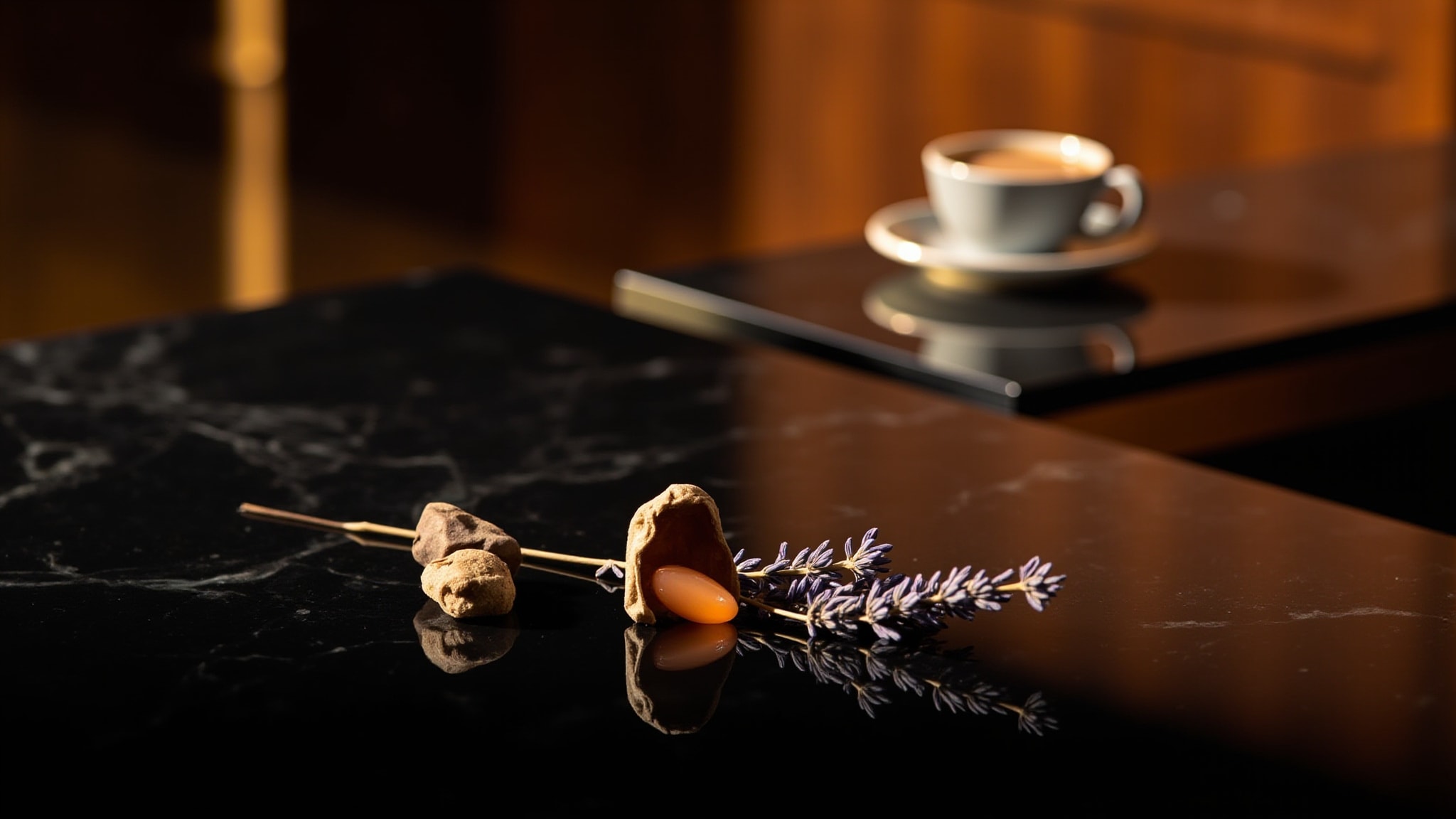
What makes this composition distinctive is the tonka stacking. Most fragrances use tonka as an accent, a whisper in the base. Here it's the entire spine. Venezuelan tonka bean absolute brings a marzipan-like richness, almost edible, while cedarwood and guaiac wood underneath keep it from tipping into pure dessert. The tarragon in the heart is the wildcard, an herbal, almost anise-tinged note that adds tension to an otherwise creamy structure. Lavender grounds the sweetness with something clean and slightly herbal.
The evolution
The first 15 minutes are bright and sharp. Bergamot and neroli hit first, the mandarin adding just enough sweetness to soften the edges. This is the part where most people form their first impression, and it's almost misleading. The opening reads fresh, almost cologne-like. Then something shifts. The lavender steps forward around the 30-minute mark, herbal and clean, and the tarragon adds a licorice-like snap that catches you off guard. Olive blossom softens the transition into the base, smoothing the shift from sharp citrus to creamy warmth. By the two-hour mark, the tonka bean is fully in charge. Warm, marzipan-sweet, backed by cedarwood's dry grain and guaiac wood's smoky depth. The drydown is where this fragrance earns its reputation. The tonka-wood accord settles close to the skin and stays there, releasing its warmth in waves through the evening.
Cultural impact
Code Special Blend sits in a comfortable middle ground for collectors who want something warmer than the original Code but not as heavy as a pure oriental. The tonka-forward profile gives it an immediate appeal, recognizable without being obvious, and the limited release status has shaped how collectors approach it. Within the Armani line, it occupies a specific niche, warmer and more gourmand than the original Code, more accessible than some of the heavier orientals in the broader market, and built around a note structure that rewards attention.