
The Story
Why it exists.
The beginning
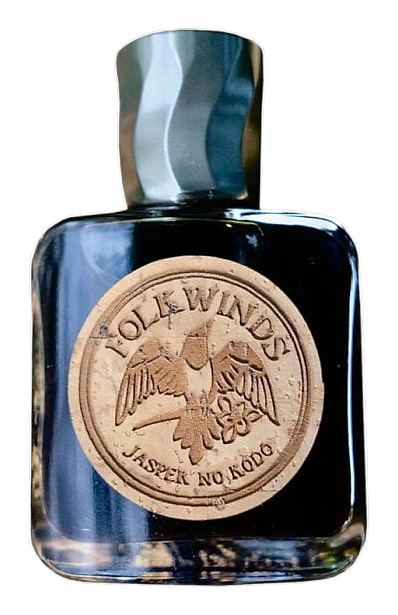
Jasper no Kodō arrived in 2023, and the idea behind it was clear: build a single, ambitious composition that does what few natural fragrances attempt. Perfumer Jono Bornstein constructed it from a tightly curated palette of natural materials, each chosen for what it brings to the whole. The ingredients list reads like an apothecary shelf with altitude: blackberries, copal, kinam, palo santo, blue lotus, and other aromatic materials drawn from a single co-extraction process. Every note enters the same vessel at the same time, so what you eventually smell isn't a stack of separate ideas but one fused impression.
What makes the co-extraction technique worth pausing on is the difference it creates on skin. When ingredients are processed together rather than blended after the fact, the resulting accord behaves differently over time. The blackberries, copal, kinam, palo santo, and blue lotus emerge from the same aromatic matrix, so there's no clear seam between fruit, resin, wood, and floral. The opening doesn't announce itself in phases. It simply arrives as a whole: dark berry and incense and sacred wood, present from the first breath.
The evolution
Blackberries and juniper crack open bright and almost jammy, carrying a tart sweetness that cuts through the cold green of Canadian hemlock and fir. The opening smells like late-summer foraging at altitude, sharp, sweet, and resinous in a way that feels alive. As the composition moves past its first phase, the berries begin to recede and the heart takes shape. Borneo oud deepens the profile with a rich, dense undertone, while gardenia and lotus cool everything down with their soft, creamy florality. Broom adds a dry warmth, a note that softens the sharper edges and gives the heart its quiet sunlit character. The green accord shifts as things progress, moving from crisp conifer toward something more contemplative and earthier. The base settles in gradually, taking its time to assert itself.
Cultural impact
Jasper no Kodō occupies a particular corner of natural perfumery where material rarity and conceptual ambition meet. It's a fragrance that draws people who already understand what cultivated kinam brings to a composition, who know the difference between copal and standard incense resins, and who appreciate when a single co-extraction produces something that multiple distillates couldn't. The cultural conversation around this kind of release tends to focus on craft rather than accessibility.