
The Story
Why it exists.
The beginning
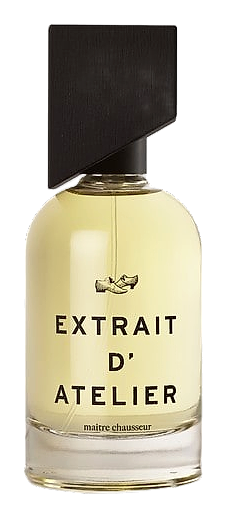
Maitre Chausseur is the olfactory memory of a shoemaker's atelier, named for the master craftsman who shapes leather into something functional and beautiful. Perfumer Claudia Scattolini built this 2016 composition around a specific sensory truth: the smell of a workshop where leather is cut, glued, stitched, and finished. Not the romantic idea of craftsmanship. The actual smell, adhesive and coffee and worn hide and the warmth of hands at work. It's a genderless fragrance that earns its unisex designation not through ambiguity but through completeness: sharp enough to assert, warm enough to invite.
What makes this composition distinctive is its refusal to separate the messy from the beautiful. The opening's green calamus and bellflower could belong to a different fragrance entirely, something clean and airy. Then ginger arrives with its clean spice, and suddenly you're in a workshop. Leather and coffee. Resin and smoke. Scattolini didn't try to polish the raw materials, she let the glue note and the bitterness coexist with vanilla and ambergris. That's rare. Most perfumers would have softened the rough edges. She leaned into them.
The evolution
The opening announces itself in bright green, calamus and bellflower, with ginger's clean heat as punctuation. It lasts maybe twenty minutes before the leather arrives, and it doesn't apologize for the transition. Coffee threads through, dark and slightly bitter, alongside elemi resin and frankincense. The orchid adds a soft floral note that could get lost but doesn't, it keeps the heart from becoming too heavy. By hour two, the drydown takes over: vetiver, sandalwood, ambergris, and vanilla wrapped around leather that stays, worn and worked and faintly animalic. The incense lingers longest. Six to eight hours on most skin. A ghost of it the next morning.
Cultural impact
Maitre Chausseur arrived in 2016 as the niche fragrance world was moving past gender categories. It fits squarely into the warm, resinous, animalic quadrant that defines many of the era's most interesting releases, compositions that don't ask whether they belong to a man or a woman, but whether they belong to a person who knows what they want.