
The Story
Why it exists.
The beginning
Lyndanisse 1219 takes its name from Lyndanisse and the year 1219, the turning point associated with the Battle of Lyndanisse in Danish history. The idea is dramatic rather than decorative: a battlefield holding its breath, courage meeting chaos, then warmth settling over the aftermath. Its 2026 release places sharp berry, floral, juniper, and cognac notes against leather, tobacco, smoke, caramel, and a sweet resinous base. The result carries the tension of the moment in its opening, then grows warmer, softer, and sweeter over time. As the composition develops, the vivid fruit and aromatic notes give way to dense materials with smoky depth, rounded sweetness, and a resinous warmth that lingers close to the skin.
The striking part is the collision between bright, aromatic notes and dense materials. The fruit, floral, juniper, and cognac elements establish a clean, brisk charge before meeting saddle leather, tobacco, caramel, and cedarwood, creating friction between polished brightness and tactile warmth. The base pushes that contrast further with benzoin, castoreum, patchouli, tonka bean, and vanilla. Nothing here sits flat. Leather gains depth as caramel rounds its edges, while tobacco is shaped by benzoin and vanilla into something softer and sweeter.
The evolution
The opening lands with brisk contrast. Elderberry and juniper berries cut through the air, while osmanthus adds a pale floral brightness. As the fragrance settles, leather, tobacco, and cedarwood take over. Caramel and labdanum soften the shift, making the heart feel less armored and more human. The drydown grows darker and sweeter: patchouli brings earthy depth, castoreum gives the base an animalic edge, and benzoin, tonka bean, and vanilla leave a warm trail. As the composition continues to develop, the early brightness gives way to a richer blend of leather, tobacco, caramel, and resinous sweetness. The result settles into a close, ambered sweetness, with enough smoke and spice to keep it from turning smooth. Its performance leaves a distinct trail that carries it through the day before softening into a warmer, intimate finish.
Cultural impact
Lyndanisse 1219 draws on the Battle of Lyndanisse and the year 1219, giving a medieval reference to a contemporary leather-and-smoke composition. That historical frame adds cultural weight to the fragrance without overpowering its sensory character. The name connects the scent to a specific moment in Danish history, while the contrast between vivid opening notes and a darker, sweeter base gives the release a sense of drama and movement. Its packaging and historically inspired concept invite discovery beyond the bottle, encouraging the fragrance to be approached as an object with a story as well as a composition to explore.
The House
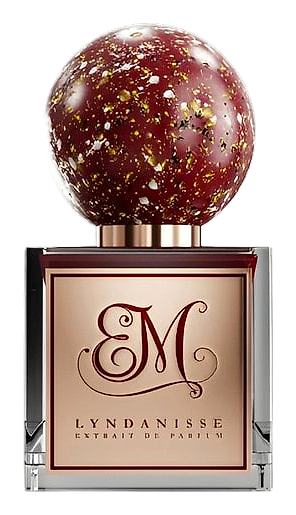
Enemaerke ParfumsEnemaerke Parfums is a Danish fragrance house built around a distinctive collision of history, scent, and design. Its debut release, Lyndanisse 1219, takes its name from the year associated with the Battle of Lyndanisse, a turning point in Danish history. The fragrance is presented as an aromatic interpretation of that medieval setting, with reviewers describing a composition that opens sharply, softens over the course of the day, and develops into a notably sweet scent. Enemaerke’s identity is equally visible in the object itself, where sculptural packaging and an unboxing-focused presentation have become part of how the fragrance is experienced and discussed.
The Creator
Michael NordstrandNordstrand builds his scents in layers, starting with a precise opening that frames the composition before unfolding into a complex heart and a lingering base. He favors bright citrus sparks, rich resins such as labdanum, and nuanced woods like sandalwood and oud.