The Story
Why it exists.
The beginning
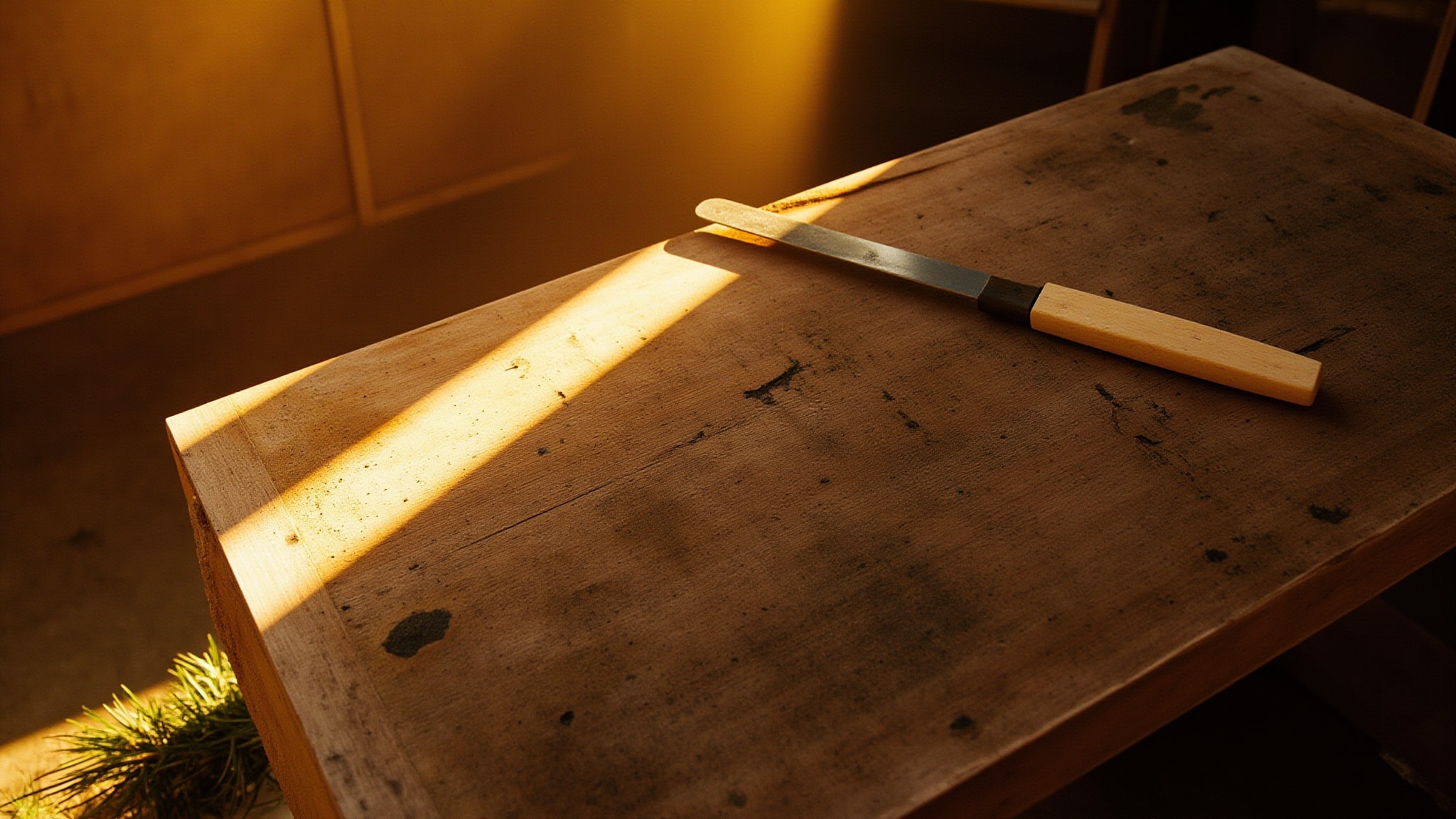
Michelangelo is named for the Renaissance artist himself, the sculptor, painter, architect whose name became shorthand for ambition itself. The brief, drawn from archive descriptions of the 2001 release, was to translate Michelangelo's creative intensity into olfactory form. Think stone dust in a workshop, pine resin from his hands, the smoke of forge fires. Hurwitz, working from the DSH Perfumes laboratory in Colorado, reached for botanical materials to build something that felt like the sensory world of making. The archive described it as an elegant yet full-bodied woody, resinous, and conifer composition. That specificity mattered, Michelangelo wasn't a vague homage. It was an argument that fragrance could be study, not just statement.
The conifer-resin architecture is where Michelangelo earns its name. Atlas cedar and Himalayan cedar provide a dual-cedar foundation rare in this class. Brazilian vetiver adds a mineral-earth dimension that keeps the drydown from going flat. Brown oakmoss, used here in a way indie houses handle more freely than commercial producers, gives the composition a vintage character that modern woody fragrances often sidestep. Tobacco absolute and ambergris create warmth without sweetness, a combination that lets frankincense and labdanum breathe rather than compete.
The evolution
The opening arrives fast, bergamot, lemon, pine needles cutting through with a brightness that reads almost sharp. Fifteen minutes. Then the herbal notes take over: bay leaf, clary sage, oregano in a dense, almost medicinal wave. The citrus doesn't disappear. It folds into the conifer and stays there for the first two hours, giving Michelangelo an aromatic intensity that doesn't let up. The heart develops slowly, unfolding between two and four hours. Frankincense rises, joined by labdanum and Peru balsam in a warm, resinous swell. Moroccan rose and palmarosa add a faint floral sweetness that tempers the resin. By the time the drydown arrives, four to six hours in, the fragrance shifts again. Cedar and vetiver take over, creating a warm, woody, intimate drydown that stays close to the skin rather than projecting. This is when the oakmoss and tobacco absolute emerge, giving Michelangelo its final chapter: mineral, warm, faintly animalic. On fabric, the tobacco and ambergris linger for days. On skin, it fades to a quiet warmth by hour eight.
Cultural impact
Michelangelo arrived in 2001, a period when American niche perfumery was still finding its shape. DSH Perfumes positioned itself as an artisanal study over a commercial statement, the collector who approaches fragrance like a visual artist approaches a canvas. The fragrance's vintage-inspired character, dense conifer-resin architecture, and botanical focus appealed to collectors seeking something outside the mainstream. For those drawn to aromatic, conifer-forward masculine compositions, Michelangelo offered something specific: the sensory world of a Renaissance workshop, translated into a wearable form.